 Save
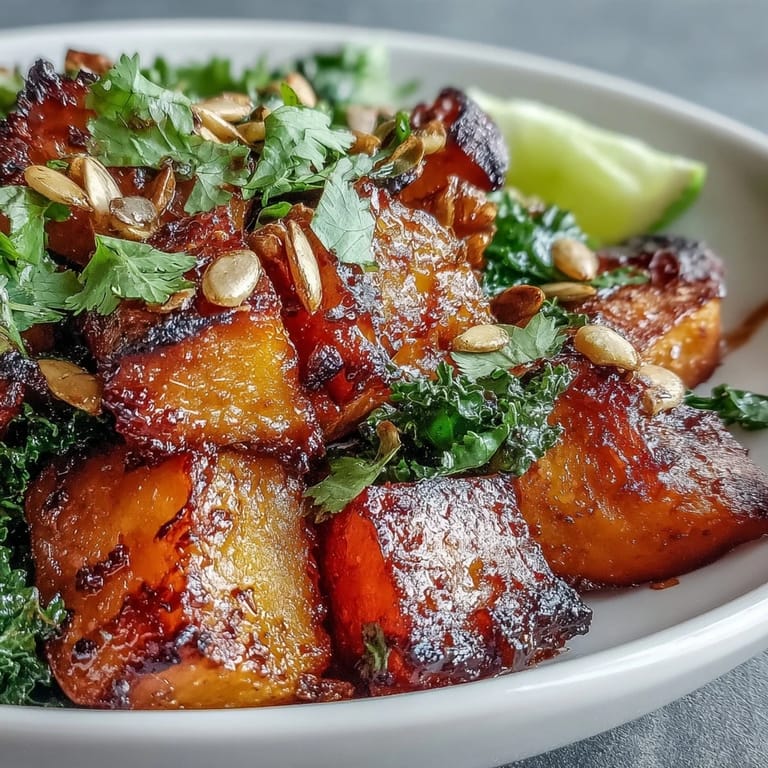
Save Last October, I found myself at the farmers market on a grey afternoon, drawn to a pile of deep orange red kuri squashes that looked almost jewel-like under the harvest lighting. I'd never cooked with them before, but something about their buttery texture and the vendor's offhand comment about their natural sweetness made me grab one. That evening, while chopping the squash into neat cubes, I realized I wanted something that honored both its delicate flavor and the season's warmth, so I reached for cinnamon, smoked paprika, and maple syrup—ingredients that felt like autumn itself.
I made this for my partner on a night when we were both exhausted and needed something nourishing but not complicated. Watching their face light up when they tasted how the lime cut through the richness reminded me why I cook—it's not really about the recipe at all, it's about that moment when someone feels genuinely cared for through food.
Ingredients
- Red kuri squash (1 medium, about 2 lbs), seeded and cut into 1-inch cubes: This variety has thin skin that softens when roasted, so you don't need to peel it—just scrub well and cut away the seeds.
- Red onion (1 medium, sliced): The sharp bite mellows beautifully in the oven, and the natural sugars caramelize into something almost candy-like.
- Kale (2 cups, chopped with stems removed): Any hardy green works, but kale's sturdy texture holds up without turning mushy when you're juggling hot bowls.
- Cooked quinoa (1 cup, optional for serving): A neutral, protein-rich base that lets the roasted vegetables be the star, but you can use rice or farro if you prefer.
- Olive oil (2 tbsp): Use a good quality oil here since it coats everything and becomes part of the flavor profile.
- Smoked paprika (1½ tsp): This is the flavor hero—it adds depth and a subtle smokiness that elevates the whole dish beyond just roasted vegetables.
- Ground cinnamon (1 tsp): Warm and grounding, it bridges the sweet and savory perfectly without making anything taste like dessert.
- Ground cumin (½ tsp): A small amount adds earthiness and complexity that keeps the spices from tasting one-dimensional.
- Chili flakes (½ tsp, adjust to heat preference): The final note that keeps you awake and engaged—start with less if you're sensitive to heat.
- Sea salt (¾ tsp) and black pepper (¼ tsp): Season generously before roasting; the vegetables concentrate their flavors as moisture evaporates.
- Pure maple syrup (2 tbsp): Drizzle it in during the last ten minutes so it caramelizes into a glaze rather than burning.
- Apple cider vinegar (1 tbsp): The acidity cuts through the richness and prevents the bowl from feeling heavy, no matter how creamy the squash is.
- Roasted pumpkin seeds (¼ cup): Buy them already roasted to save time, or roast your own for a nuttier flavor and the satisfaction of doing it yourself.
- Fresh cilantro (2 tbsp, chopped): Don't skip this—the brightness wakes everything up and feels like a little celebration on top of each bowl.
- Lime (1 small, cut into wedges): A squeeze of fresh lime at the very end transforms the whole experience, so don't relegate it to optional.
Tired of Takeout? 🥡
Get 10 meals you can make faster than delivery arrives. Seriously.
One email. No spam. Unsubscribe anytime.
Instructions
- Heat your oven and prep your workspace:
- Preheat to 400°F and line a baking sheet with parchment paper so cleanup becomes someone else's problem. This temperature is hot enough to caramelize the squash's natural sugars but not so intense that the outside burns before the inside softens.
- Coat your vegetables in spice and oil:
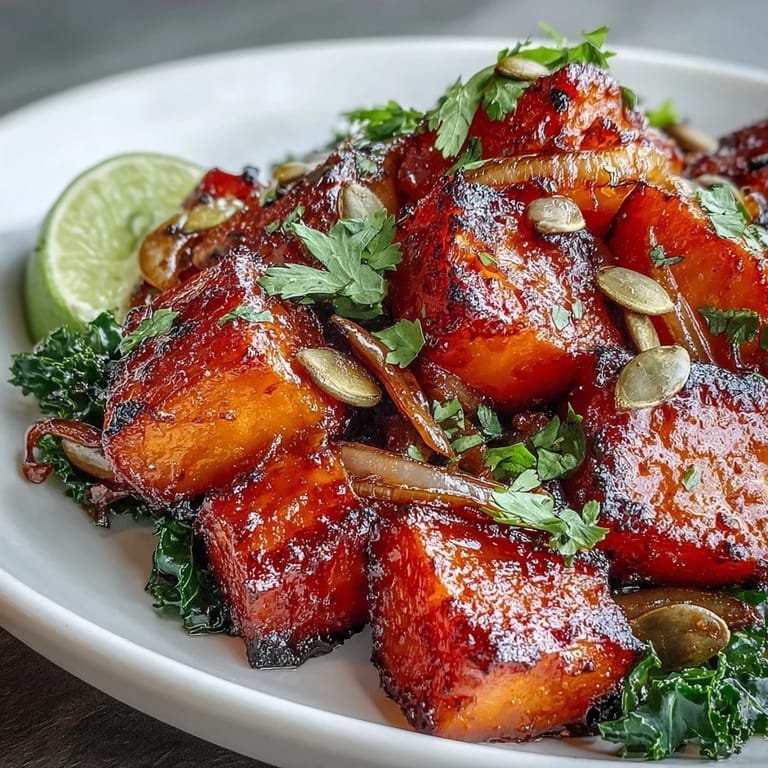
- In a large bowl, toss the cubed squash and sliced onion with olive oil, smoked paprika, cinnamon, cumin, chili flakes, salt, and pepper until everything gleams with oil and spice. Take a moment to smell it—this is when you'll know the flavor profile is right.
- Give them their first roast:
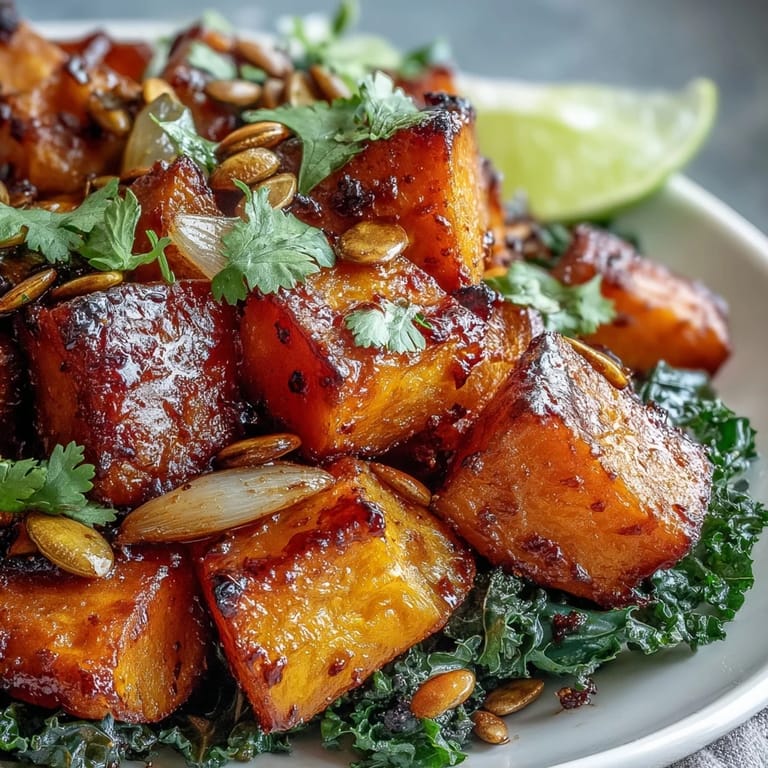
- Spread everything in a single layer on the baking sheet, resisting the urge to crowd the pan because the vegetables need space to caramelize rather than steam. Twenty-five minutes at this stage is enough time to pour a cup of tea and breathe.
- Add sweetness and tang:
- Drizzle the maple syrup and apple cider vinegar over the partially roasted vegetables, toss gently with a wooden spoon, and return to the oven for another ten minutes. The vinegar will smell sharp at first, but it mellows into the most beautiful glaze.
- Wilt your greens while the squash finishes:
- Heat a skillet and sauté the chopped kale with a pinch of salt for just two to three minutes—it should still have a slight chew and maintain its vibrant green color. If you prefer steamed greens, use a steamer basket instead; they'll be more delicate and bright.
- Assemble your bowl with intention:
- Divide the cooked quinoa among four bowls, then top each one with the roasted squash and onions, and the wilted kale arranged in its own little section. This isn't just plating; it's giving each element room to shine and making the bowl visually interesting.
- Finish with the flourishes that make it special:
- Top each bowl with a generous handful of roasted pumpkin seeds, a scattered pinch of fresh cilantro, and set a lime wedge on the rim. Encourage everyone eating this to squeeze the lime over their bowl right before diving in, because that final bright note is non-negotiable.
 Save
Save The first time I served this to someone who swore they didn't like squash, they went back for seconds and asked for the recipe on their way out. It felt like I'd unlocked something, proven that sometimes people just need squash prepared in a way that respects its delicate nature instead of drowning it in brown butter.
Why This Bowl Works as a Complete Meal
On its own, roasted squash is lovely but incomplete—it needs grounding, contrast, and something to lean against. By combining creamy roasted vegetables with hearty greens, a protein-rich grain base, and bright finishing touches, you're not just eating dinner, you're eating a complete experience that satisfies on every level. The quinoa keeps you full without weighing you down, the kale adds an earthy mineral quality, and the spiced squash brings warmth and sweetness that ties everything together like a conversation between old friends.
Making This Ahead and Storing It Well
Roast the squash and onions up to two days in advance and store them in an airtight container in the refrigerator—they actually taste better on day two once the flavors have had time to deepen and meld. When you're ready to eat, reheat the vegetables gently in a 350°F oven for ten minutes just to take the chill off, then prepare fresh kale and assemble the bowls so the greens stay bright and aren't softened by sitting in warmth. The lime and cilantro should always be added right before eating, which means you can prep almost everything when life is quieter and still have something fresh and vibrant ready when you need it most.
Variations and Personal Touches
This bowl is genuinely flexible without losing its character—I've made it with baby spinach when kale wasn't in the house, added a handful of cooked chickpeas for extra substance, and even roasted Brussels sprouts alongside the squash when I was feeling ambitious. One evening I stirred a dollop of tahini into the bottom of the bowl before assembling everything, creating a creamy base that made the whole thing feel more luxurious. The base formula of roasted sweet vegetables plus hardy greens plus bright finishing touches is forgiving enough that you can play with it based on what's in your kitchen and what your body is craving that particular week.
- Swap the quinoa for farro, brown rice, or even roasted chickpeas if you want to shift the texture or flavor.
- Add grilled tofu, tempeh, or cooked lentils if you want extra protein and a heartier feel to the bowl.
- Try pomegranate arils, dried cranberries, or toasted nuts on top if you want to shift the brightness or add crunch.
 Save
Save This bowl became my go-to meal during the transition from fall into winter, something I could make on Sunday afternoon and eat from all week knowing I'd look forward to it. There's real magic in cooking something that nourishes your body while also making you genuinely happy to eat it.
Recipe Questions & Answers
- → What does red kuri squash taste like?
Red kuri squash has a naturally sweet, nutty flavor with a smooth, creamy texture when roasted. It's similar to butternut squash but often more intense in sweetness and holds its shape beautifully during cooking.
- → Can I make this ahead of time?
Yes! The roasted vegetables keep well in the refrigerator for up to 4 days. Store components separately and reheat gently before assembling bowls. Add fresh garnishes just before serving for best texture and flavor.
- → Is this dish spicy?
The spice level is mild to medium, with chili flakes providing gentle warmth that balances the sweetness. Adjust the amount based on your preference—reduce for less heat or increase for more kick.
- → What can I substitute for red kuri squash?
Butternut squash, acorn squash, or delicata squash work well as substitutes. Adjust roasting time slightly based on the size of your cubes—smaller pieces cook faster.
- → How do I store leftovers?
Store roasted vegetables, kale, and quinoa separately in airtight containers in the refrigerator for up to 4 days. Reheat vegetables in a 350°F oven until warmed through, then assemble bowls with fresh garnishes.
- → Can I freeze this dish?
The roasted squash and onion freeze well for up to 3 months. Avoid freezing the kale or fresh garnishes—add those after reheating. Thaw overnight in the refrigerator before reheating.