 Save
Save There's something about the smell of chili simmering on a weeknight that makes everything feel manageable. I discovered this version on a particularly cold evening when I had a random assortment of pantry staples and decided to throw them together over rice instead of serving it traditionally. The result was so comforting and flexible that it became my go-to when I needed something hearty but didn't want to overthink dinner.
I made this for a friend who had just moved into a new apartment with absolutely nothing in her kitchen. She had a pot, a spoon, and about thirty minutes before some family showed up. We chopped everything on a cutting board balanced on her sink, and watching her realize she could make something this impressive and delicious from so little was genuinely moving.
Ingredients
- Olive oil: Two tablespoons is enough to prevent sticking without making the chili greasy, which I learned after overpouring once and having to start over.
- Onion and garlic: These are your flavor foundation, and mincing the garlic fine means it distributes evenly rather than leaving unpleasant chunks.
- Bell peppers: One red and one green gives you color, sweetness, and a hint of earthiness that balances the spices beautifully.
- Ground beef: A pound is perfect for four hearty servings, though turkey or plant-based alternatives work just as well if that's your preference.
- Tomato paste: This concentrated flavor punch is what makes the chili taste deep and intentional rather than watery and sad.
- Diced tomatoes: Canned is absolutely fine here and honestly more convenient than fresh, especially in winter.
- Kidney beans and black beans: Draining and rinsing them removes the excess sodium and starchy liquid that can make your chili cloudy.
- Corn kernels: Fresh, frozen, or canned all work equally well, adding sweetness and texture that prevents the chili from feeling one-dimensional.
- Spices: Chili powder, cumin, smoked paprika, and oregano create layers of flavor that taste homemade and intentional.
- Beef or vegetable broth: This keeps everything from becoming a dense paste and lets the flavors actually meld together properly.
- Rice or grains: Cook whatever you have on hand, whether it's white rice, brown rice, quinoa, or farro.
Tired of Takeout? 🥡
Get 10 meals you can make faster than delivery arrives. Seriously.
One email. No spam. Unsubscribe anytime.
Instructions
- Start with aromatics:
- Heat your olive oil over medium heat and let the onion soften for a couple minutes until it smells sweet and caramelized at the edges. You'll notice the kitchen already starting to smell like dinner.
- Build the flavor base:
- Add garlic and bell peppers and give them three to four minutes to get soft and fragrant. This is when you realize how much better fresh aromatics smell than dried ones could ever taste.
- Brown the meat:
- Add your ground beef and break it up with a wooden spoon as it cooks, making sure to get it all nicely browned and no longer pink in the middle. This step takes about five minutes and matters more than you'd think for the final texture.
- Deepen the flavor:
- Stir in tomato paste and let it cook for just one minute, which helps it lose its raw taste and integrate into the oil. Don't skip this moment even though it feels small.
- Combine everything:
- Add your tomatoes, both kinds of beans, corn, and all the spices at once, stirring everything together until the chili looks cohesive and smells absolutely incredible. This is honestly the most satisfying moment of the whole process.
- Let it simmer:
- Pour in your broth, bring everything to a gentle simmer, then lower the heat and cover it. Let it cook for twenty-five to thirty minutes, stirring occasionally, which gives all the flavors time to actually get to know each other.
- Prepare your base:
- While the chili simmers, cook your rice or grains according to package directions so they're ready when you are.
- Bring it all together:
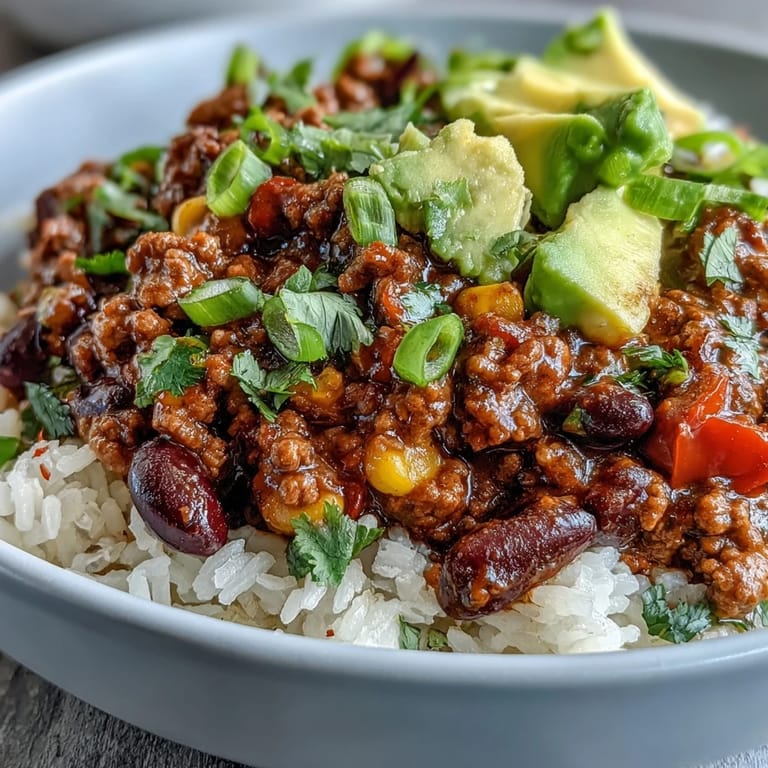
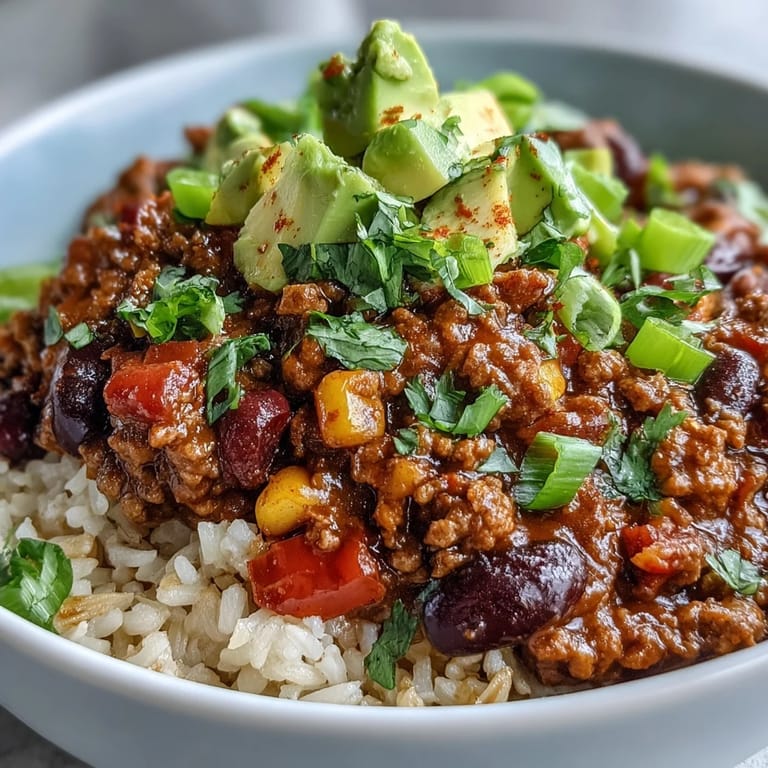
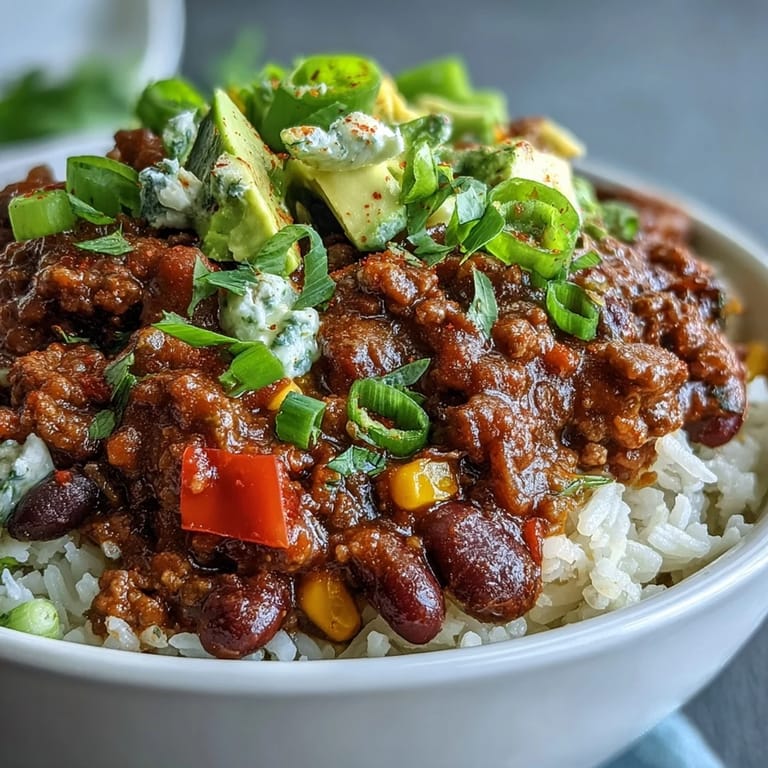
- Spoon your cooked grains into bowls and ladle the chili generously over top, then add whatever toppings sound good to you. This is your chance to make each bowl feel personal.
 Save
Save My neighbor knocked on my door one Saturday asking what smelled so good, and I ended up sending her home with a container of this chili because she looked like she needed something warm and real. She texted me a photo later of her family eating it together, and that's when I realized this recipe does something more than just feed people.
Making It Your Own
This chili is remarkably forgiving about substitutions. I've made it with turkey when I was being health-conscious, with a plant-based ground meat substitute when cooking for a vegetarian friend, and even with extra beans instead of meat altogether. Each version tasted wonderful because the spice blend and vegetable base carry the dish regardless of what protein you choose.
Toppings That Matter
The toppings aren't just decoration, they're actually crucial to how the chili tastes and feels when you eat it. Melted cheddar adds richness, a spoonful of sour cream cools things down if you went heavy on the cayenne, avocado adds creaminess, and lime wedges brighten everything with a jolt of acid. I've learned that different people want different things, so I put out a little lineup and let everyone build their own version.
Timing and Flexibility
The total time from zero to dinner is about an hour, but you can stretch that out if you want. The chili actually tastes better the next day when the flavors have had even more time to settle and get comfortable with each other. If you're cooking ahead, just refrigerate it and reheat gently before serving, and everything will taste even more intentional than it did the first time.
- Make it vegetarian by using extra beans or a plant-based ground meat instead of beef.
- Adjust the heat level by adding more cayenne if you like it spicy or leaving it out entirely if you prefer milder flavors.
- Try serving it over different grains like quinoa, farro, or even polenta for a change of pace.
 Save
Save This chili bowl has become my answer to almost every dinner emergency, whether I'm cooking for myself, for friends, or for that moment when someone needs comfort food without the drama. It's the kind of recipe that proves you don't need complicated techniques or rare ingredients to create something genuinely delicious.
Recipe Questions & Answers
- → Can I make this vegetarian?
Yes, simply replace the ground beef with plant-based meat alternative or add an extra can of beans. Use vegetable broth instead of beef broth for fully vegetarian results.
- → How long does leftover chili keep?
Store cooled chili in an airtight container in the refrigerator for up to 4-5 days. The flavors often develop and taste even better the next day. Freeze for up to 3 months.
- → What grains work best as a base?
White and brown rice are classic choices. Quinoa, farro, bulgur, and barley also work beautifully. Choose based on texture preference and cooking time available.
- → Can I adjust the spice level?
Absolutely. Reduce or omit the cayenne pepper for milder flavor. Add extra chili powder, cayenne, or even fresh diced jalapeños during cooking for more heat. Taste and adjust as needed.
- → What other toppings complement this dish?
Beyond cheese, sour cream, and cilantro, try crushed tortilla chips for crunch, pickled red onions for tang, hot sauce for heat, or a dollop of guacamole for creaminess.