 Save
Save There's something almost magical about watching egg whites transform into glossy peaks under the mixer's steady rhythm, and I discovered that magic on a humid spring afternoon when a friend challenged me to make something elegant without flour. Mini pavlovas became my answer, and the first time I pulled those golden-kissed meringue nests from the oven, their delicate crunch and marshmallow centers felt like a small victory. What started as a technique to master has become my go-to when I want to impress without spending hours in the kitchen.
I'll never forget assembling these for my sister's bridal shower last June, standing in her tiny kitchen while the air conditioning struggled against the summer heat. She watched me pipe each meringue nest and laughed when I accidentally knocked one off the baking sheet, and we both ended up tasting the broken pieces with fresh cream and strawberries. That imperfect moment taught me that pavlovas are forgiving enough to celebrate mistakes, and delicious enough that nobody remembers them anyway.
Ingredients
- Egg whites (4 large, room temperature): Cold eggs won't whip properly, so I learned to pull mine from the fridge about 20 minutes before mixing, and any trace of yolk means starting over because fat prevents peaks from forming.
- Superfine sugar (1 cup): Regular granulated sugar takes longer to dissolve, which is why superfine matters here, and adding it gradually gives the mixture time to reach that glossy, thick perfection.
- Cornstarch (1 teaspoon): This stabilizes the meringue and helps create that crispy exterior while keeping the inside marshmallow-soft, a discovery that changed everything about my pavlova texture.
- White vinegar (1 teaspoon): It sounds odd but it weakens the egg white structure just enough to prevent cracking, something I read about and now swear by.
- Vanilla extract (1 teaspoon): Pure extract makes a noticeable difference in depth of flavor that imitation just can't match.
- Heavy whipping cream (1 cup, cold): Cold cream whips faster and holds peaks longer, so I chill my bowl and beaters beforehand.
- Powdered sugar (2 tablespoons): It dissolves instantly into cream without the grittiness of granulated sugar.
- Fresh strawberries (1½ cups, hulled and sliced): The fresher and riper they are, the more their natural juices mingle with the sugar and lemon, creating their own light syrup.
- Granulated sugar and lemon juice for strawberries: The lemon brightens the berry flavor and prevents the strawberries from turning dark, while the sugar draws out their juices.
Tired of Takeout? 🥡
Get 10 meals you can make faster than delivery arrives. Seriously.
One email. No spam. Unsubscribe anytime.
Instructions
- Set the stage:
- Preheat your oven to 250°F and line a baking sheet with parchment paper, making sure you have space for six nests to bake without touching. I always prep this while my egg whites come to room temperature, so nothing gets rushed.
- Whip the egg whites:
- In a bowl that's been washed and dried thoroughly, beat the egg whites on medium speed until soft peaks form, watching for that moment when the whites go from foamy to cloud-like. It usually takes about 2 to 3 minutes, and you'll know it's ready when peaks form but still curl over at the tips.
- Add sugar gradually:
- Sprinkle in the superfine sugar one tablespoon at a time, beating continuously, which takes patience but ensures each grain dissolves completely. Once all the sugar is incorporated and the mixture looks glossy and thick enough to hold stiff peaks, you're ready for the next step.
- Fold in the supporting ingredients:
- Gently fold the cornstarch, vinegar, and vanilla into the meringue with a spatula using slow, careful strokes to avoid deflating all those beautiful air bubbles. This gentle folding is what keeps the meringue light and airy rather than dense.
- Shape the nests:
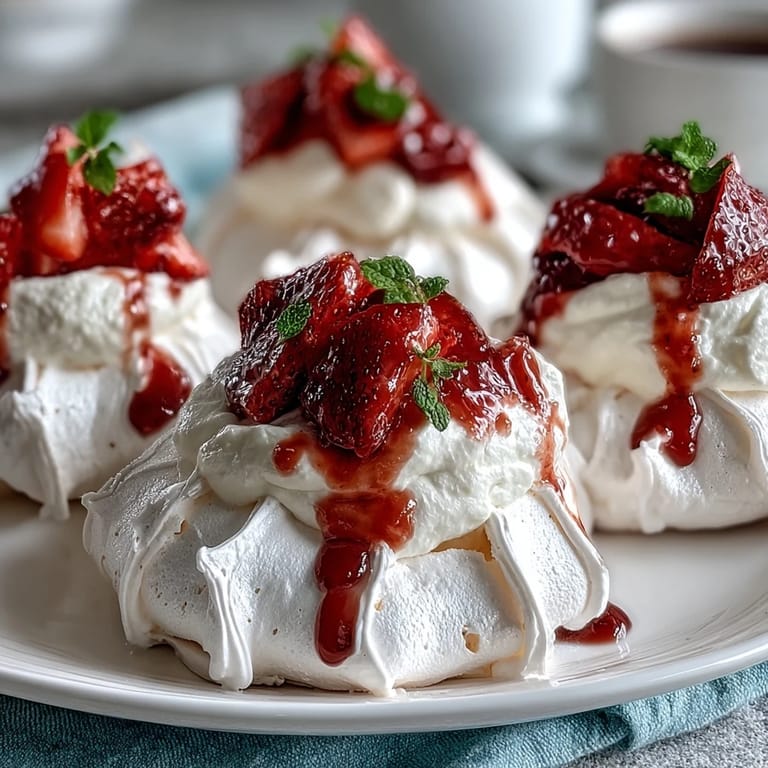
- Spoon or pipe the meringue onto the prepared baking sheet in six mounds, then use the back of a spoon to create a shallow indentation in the center of each, which will be where the cream and strawberries sit. Don't stress about making them identical—rustic and uneven actually looks more charming.
- Bake slowly and patiently:
- Bake for a full hour at that low temperature, which dries out the meringue rather than coloring it. Once the hour is up, turn off the oven and crack the door open just slightly, allowing the meringues to cool completely inside, which usually takes about 30 minutes.
- Prepare the strawberries:
- While the meringues cool, toss your sliced strawberries with granulated sugar and lemon juice, then set them aside to macerate for about 15 minutes. This time allows the strawberries to release their own juices and create a light, natural syrup.
- Whip the cream:
- Just before assembly, whip your cold heavy cream with powdered sugar and vanilla until soft peaks form, stopping before it turns grainy. This should only take a couple of minutes with cold cream and a cold bowl.
- Assemble with care:
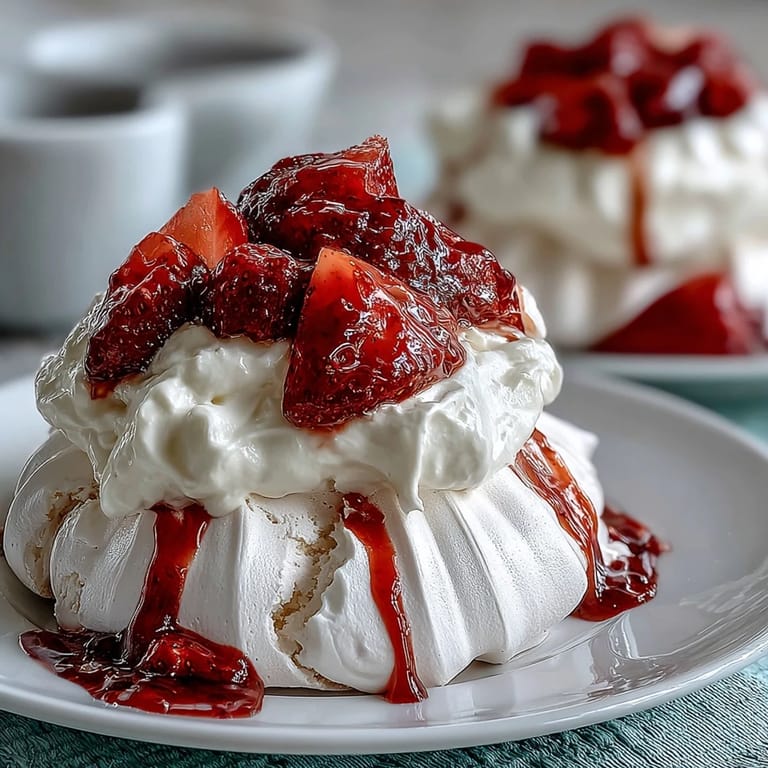
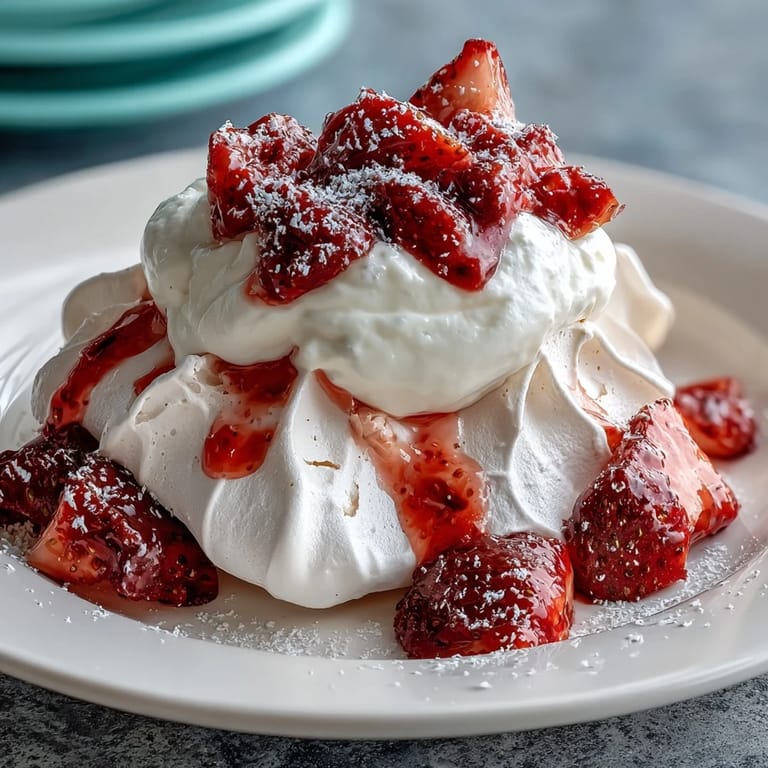
- Place each cooled meringue nest on a serving plate, dollop the whipped cream into the center, and crown it with the macerated strawberries and a spoonful of their juices. Serve immediately so the meringue stays crispy and the whole thing doesn't get soggy.
 Save
Save I remember my grandmother watching me serve these at a family dinner and getting a little misty-eyed, because they reminded her of pavlovas she'd eaten in Australia decades before. That connection between a simple dessert and a memory she'd carried for so long taught me that food is never really just about taste.
Why Meringue Matters
Meringue is one of those finicky things that seems intimidating until you understand what's actually happening—the egg whites are being whipped full of tiny air bubbles that get set into place by heat, creating that signature contrast between crispy shell and pillowy interior. I spent years making meringues that either stayed chewy or cracked completely until I finally understood that low, slow heat and patience are everything. Once you nail this technique, you've unlocked an entire world of pavlovas, tarts, and crispy cookies that all follow the same basic rules.
Flavor Variations That Actually Work
One of my favorite discoveries was that pavlovas are a blank canvas willing to work with whatever fruit is in season, so I've done versions with raspberries in summer, blackberries in late July, and even a winter combination of pomegranate seeds and candied ginger. The original recipe with strawberries is timeless, but I've also drizzled passion fruit pulp over the top like the recipe notes suggest, and it adds a tropical brightness that elevates the whole thing. The point is to never feel locked into one version—these nests welcome experimentation.
Timing and Storage Secrets
The real beauty of pavlovas is that you can make the meringue nests completely ahead of time, storing them in an airtight container for up to a day, and then assemble them just before serving when you're ready to shine. This is what makes them perfect for entertaining, because your stressed self from an hour before the guests arrive can do the hard work, and your calm self right before they walk in just adds cream and berries. One thing I've learned is to never add the strawberries more than 30 minutes before serving, because their juice will gradually soften even the crispiest meringue, though honestly sometimes that softer texture is wonderful too.
- Keep meringue nests in an airtight container at room temperature away from humidity, which is their natural enemy.
- Assemble your pavlovas as close to serving time as possible to keep the meringue crispy and the whole dessert textually perfect.
- If you live somewhere humid, you might find that your meringues absorb moisture from the air, which is why baking them on a dry day makes a difference.
 Save
Save These little pavlovas have become my answer to the question of what to bring when I want to feel like I've made something special but haven't spent all day cooking. They're a reminder that sometimes the most impressive things are actually the simplest.
Recipe Questions & Answers
- → How do I achieve crisp meringue nests?
Bake the meringue at a low temperature (around 120°C) for an hour, then turn off the oven and let them cool inside to maintain crispness.
- → Can I use other fruits instead of strawberries?
Yes, fresh berries like raspberries or blueberries work well and can be substituted or mixed in for different flavors.
- → What is the best way to whip cream for topping?
Chill the cream and bowl before whipping, then beat until soft peaks form, adding powdered sugar and vanilla for flavor.
- → How long should strawberries macerate before serving?
Mix sliced strawberries with sugar and lemon juice and let them rest for about 15 minutes to release juices and soften.
- → Are these pavlovas suitable for gluten-free diets?
Yes, the meringue base contains no gluten, making them an excellent gluten-free option.