 Save
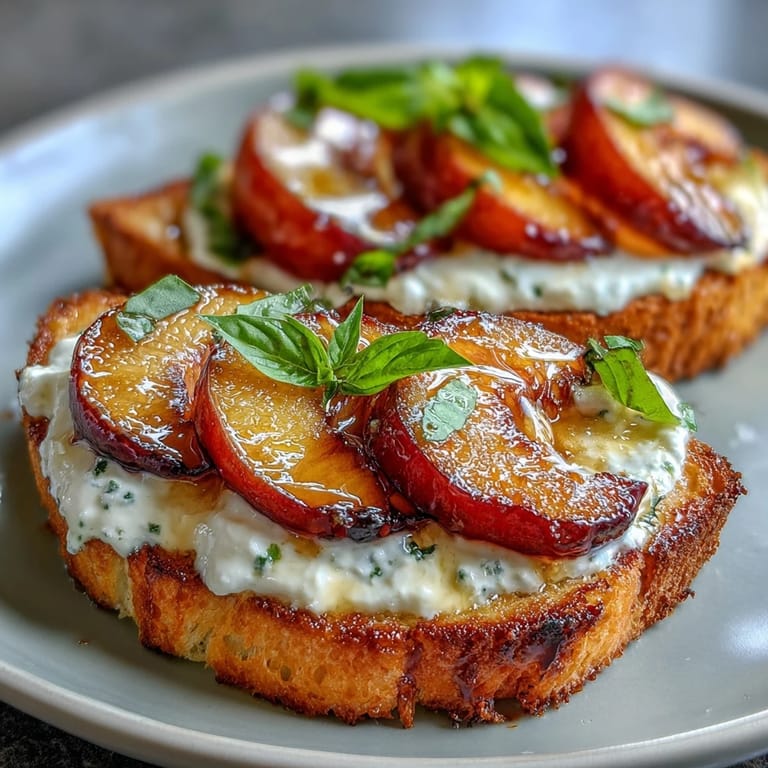
Save My friend Sarah showed up one Sunday morning with a container of burrata from the farmer's market, perfectly ripe peaches still warm from the sun, and that look that meant she wanted to cook something together. We'd both been stuck in heavy breakfast routines—scrambled eggs, the usual suspects—and she insisted we needed something that tasted like spring on a plate. Twenty minutes later, we were standing in her kitchen watching honey pool into the creases of torn burrata, and I understood why she'd been so excited. This toast became our go-to move whenever the season shifts.
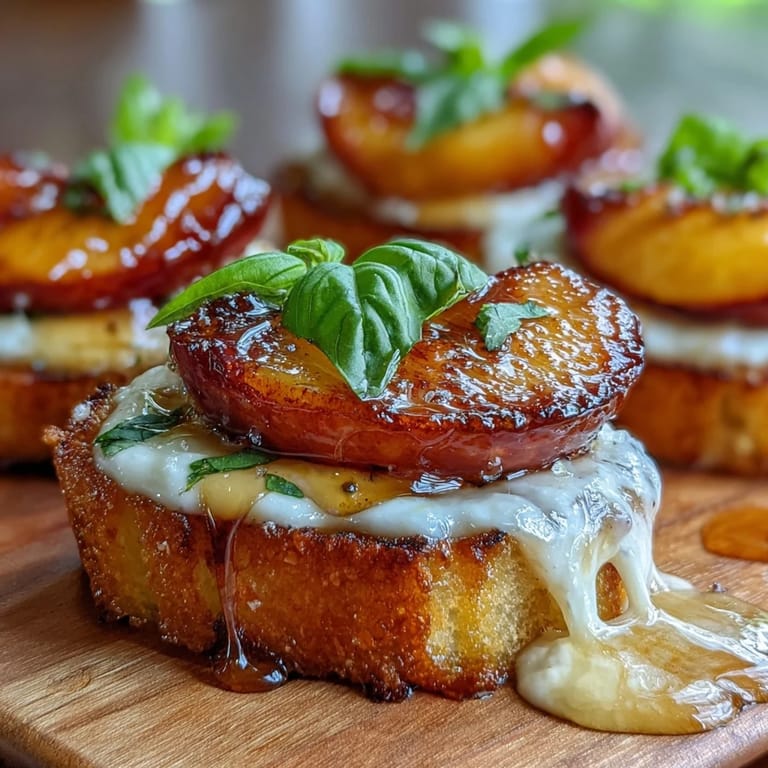
I made these for my sister's baby shower last April, arranged on a wooden board with fresh basil scattered everywhere, and watched people go quiet for a second before taking a bite—that moment when food stops being functional and becomes an experience. Someone asked if it was complicated, and I got to say no, just good ingredients treated with respect. That's the whole secret right there.
Ingredients
- Rustic sourdough or country bread: Use thick slices because thin bread will snap under the weight of the toppings; the crust provides essential structure and that satisfying crunch that makes the whole thing work.
- Burrata cheese: This is where the magic happens—seek out the freshest you can find because the creaminess is the entire point, and quality burrata makes all the difference between good and unforgettable.
- Ripe peaches: Choose ones that yield gently to pressure and smell fragrant; unripe peaches will taste mealy and bitter, so don't rush the season or settle for hard ones.
- Extra-virgin olive oil: Don't skip this or substitute with regular oil—the fruity notes complement the peaches in ways cheaper oils simply cannot.
- Honey: Raw or unfiltered honey tastes deeper and more complex than processed versions, and it actually matters when honey is the final flavor note.
- Flaky sea salt and freshly ground black pepper: These aren't garnish afterthoughts; they're flavor amplifiers that wake up everything else on the plate.
- Fresh basil: Tear it by hand rather than cutting with a knife to prevent bruising and keep it vibrant and aromatic.
- Pistachios or toasted almonds (optional): A small handful adds textural surprise and a subtle nuttiness that plays beautifully with stone fruit.
Tired of Takeout? 🥡
Get 10 meals you can make faster than delivery arrives. Seriously.
One email. No spam. Unsubscribe anytime.
Instructions
- Toast the bread until it sings:
- Slide your slices into the toaster or onto a hot grill pan and listen for that crackling sound—you want golden brown with some darker spots, which signals crispness that will hold up to the toppings. Don't walk away; bread goes from perfect to charred in seconds.
- Build your foundation:
- Arrange the warm toast on whatever surface you're serving from, leaving just enough space between each slice so they feel individual rather than crowded.
- Tear and scatter the burrata:
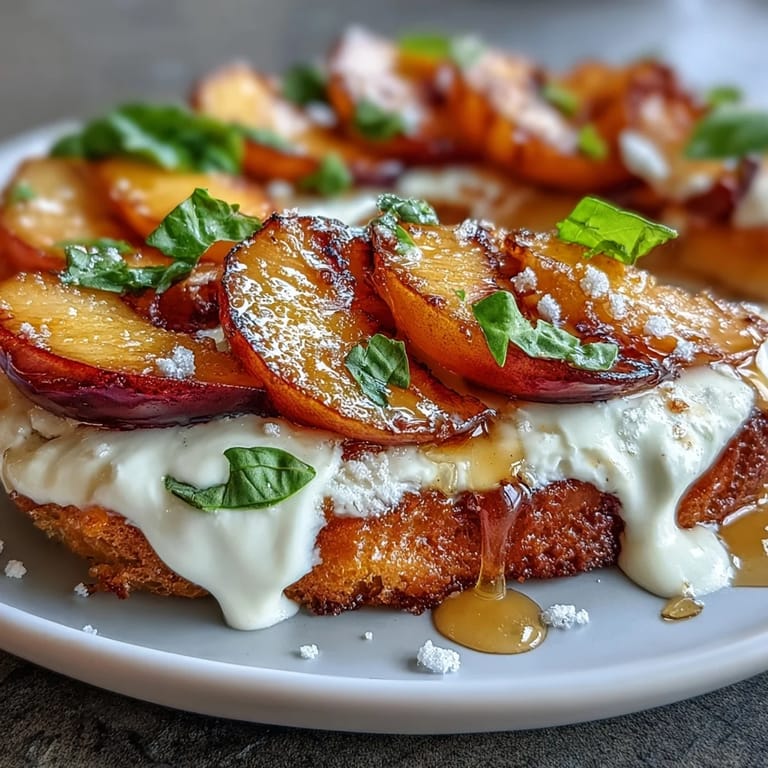
- Gently pull the cheese apart with your fingers into irregular pieces and let them fall across each toast; the warmth of the bread will soften it just slightly, which is exactly what you want.
- Layer the peaches with intention:
- Arrange the slices in slightly overlapping rows so they catch the light and look beautiful, which matters because we eat with our eyes first.
- Drizzle and balance:
- A thin spiral of honey and olive oil across each toast—not so much that it pools, but enough that every bite has that slick, luxurious feeling.
- Season like you mean it:
- A generous pinch of flaky salt and a few cracks of pepper on each piece; the salt specifically brings out the sweetness of the peaches in a way that seems counterintuitive until you taste it.
- Final touches:
- Scatter torn basil leaves and nuts if you're using them, then carry everything to the table immediately because crispy bread waits for no one.
 Save
Save My neighbor mentioned once that this was the first time she'd tasted something and understood why food mattered beyond hunger, and I still think about that conversation. It's remarkable what happens when you respect simple ingredients and let them be exactly what they are.
Timing and Seasoning
The window between toasting and serving is crucial because bread loses its snap within minutes of cooling, so have everything else prepped and ready before the bread even goes into the toaster. The seasoning isn't something to sprinkle absently at the end—taste as you go and adjust, because the balance of salt, sweetness, and acidity is what transforms good ingredients into something memorable.
Seasonal Variations
Nectarines work beautifully if peaches aren't perfect, and apricots offer a more delicate sweetness that's wonderful in early spring when stone fruits are just starting their season. I've also grilled thinner peach slices for a minute on each side, which concentrates their sweetness and adds a subtle char that plays nicely against the creamy cheese—just watch them closely because they soften quickly.
Serving and Pairing Ideas
This arrives at the table best when everyone can see it, so arrange on a board or platter rather than individual plates, which invites people to gather around and pick. A chilled glass of Prosecco or a delicate white wine with floral notes makes the pairing feel intentional and complete, turning a simple toast into an occasion.
- Make these ahead of just the toasting step—all other components can be arranged within seconds of serving.
- If you're feeding a crowd, assemble components separately and let guests build their own versions at the table.
- Store any leftover burrata in its original liquid and use within a day for best texture and flavor.
 Save
Save This is the kind of recipe that shows you don't need complexity to create something worth sharing—just attention and respect for what's already wonderful. Make it when you want to feel like spring is on your plate.
Recipe Questions & Answers
- → Can I use other fruits instead of peaches?
Yes, nectarines or apricots can be substituted to maintain the sweet, juicy element while complementing the creamy burrata.
- → What bread works best for this dish?
Rustic sourdough or country bread with a thick crust and chewy crumb provides the ideal base for layering and toasting.
- → How can I add extra flavor to the peaches?
Grilling the peach slices for 1–2 minutes per side caramelizes their natural sugars, enhancing the overall flavor profile.
- → Are there suitable garnishes to add texture?
Chopped pistachios or toasted almonds add a pleasant crunch and nutty nuance, complementing the creamy and fruity layers.
- → What is a recommended beverage pairing?
A chilled glass of Prosecco or a floral white wine pairs beautifully with the toast’s fresh and rich flavors.