 Save
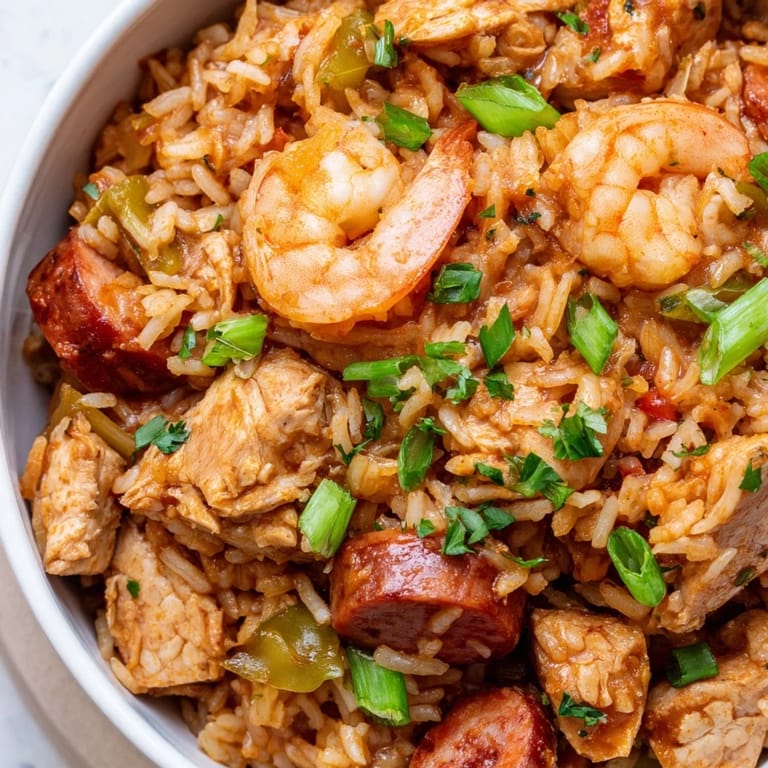
Save The first time I made jambalaya, my tiny apartment kitchen smelled like a New Orleans street corner for three days straight. My neighbor knocked on my door thinking I had hidden a restaurant in there. That pot fed me through a long week of deadlines and became the dish I now make whenever I need something that feels like a warm embrace.
I served this at a Mardi Gras party years ago and watched three friends hover over the stove, spoon in hand, claiming they were just taste testing. The pot was empty before I could even set the serving bowls on the table. Now I double the batch whenever friends come over.
Ingredients
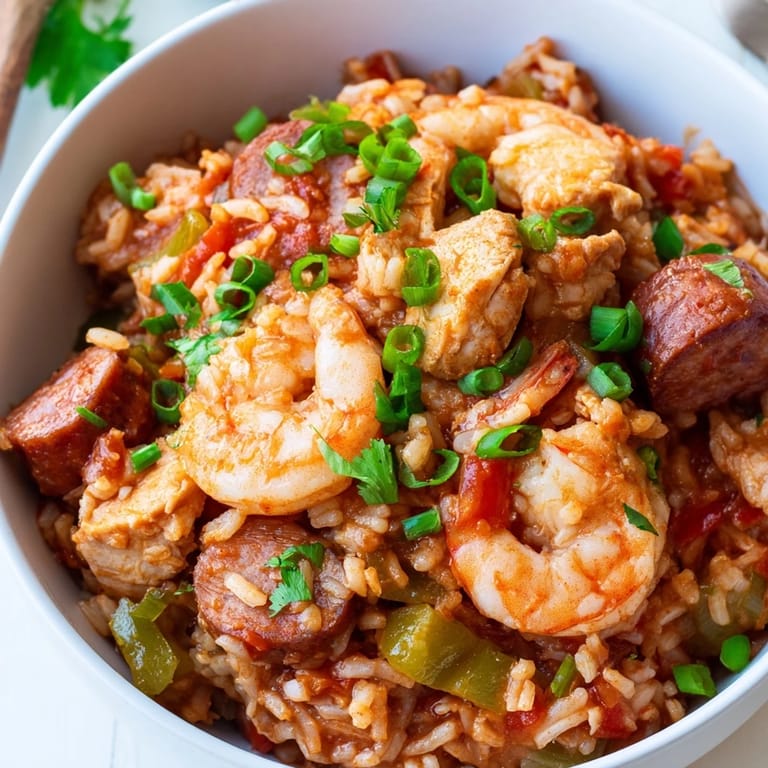
- Andouille sausage (225 g): This smoky Cajun sausage is the backbone of authentic flavor and cannot be replaced without changing the character completely
- Chicken thighs (2 pieces): Dark meat stays tender through long simmering and contributes richness that breasts never achieve
- Large raw shrimp (225 g): Added in the final minutes so they stay plump and sweet instead of becoming rubbery
- The holy trinity (onion, bell pepper, celery): This aromatic base is nonnegotiable for Creole cooking
- Long grain white rice (300 g): Short grain turns to mush and brown rice never softens properly in this cooking time
- Smoked paprika (1½ tsp): Adds that gorgeous brick red color and subtle campfire essence
- Dried thyme and oregano (1 tsp each): Earthy herbs that ground the bright Cajun spices
- Cayenne pepper (1 tsp): Adjust this based on your heat tolerance but do not skip it entirely
- Chicken broth (720 ml): Homemade broth transforms good jambalaya into great jambalaya
Tired of Takeout? 🥡
Get 10 meals you can make faster than delivery arrives. Seriously.
One email. No spam. Unsubscribe anytime.
Instructions
- Brown the sausage first:
- Crisping the andouille in hot oil renders out fat that becomes part of your cooking base
- Sear the chicken pieces:
- Get good color on all sides for maximum flavor and set aside with the sausage
- Build your vegetable base:
- Soften the holy trinity until the onions turn translucent and the kitchen smells amazing
- Toast the rice and spices:
- This brief cooking wakes up the spices and helps the rice stay separate instead of clumping
- Add the liquid and deglaze:
- Pour in the tomatoes and broth while scraping up all those flavorful browned bits
- Simmer covered:
- Let the rice absorb the liquid slowly for perfect texture
- Finish with the shrimp:
- Nestle them into the hot rice and they will cook through in just a few minutes
- Rest and fluff:
- Let everything settle for a few minutes before serving so the flavors meld together
 Save
Save This recipe taught me patience in the kitchen more than any other dish. The waiting is hard but the reward is that moment when you finally lift the lid and steam billows out carrying layers of spicy smoky aroma.
Getting The Rice Texture Right
I have learned through many failed batches that rinsing the rice until the water runs clear prevents that gummy texture that ruins good jambalaya. The extra starch that washes away is exactly what makes the grains cling together when you want them fluffy and separate.
Building Heat Levels
Start with the cayenne amount listed then taste at the very end. You can always add more heat but you cannot take it away. I keep hot sauce on the table so guests can adjust their own bowls to their preferred spice level.
Make Ahead Strategy
Jambalaya actually tastes better the next day when the flavors have had time to marry and develop deeper complexity. I often make it in the afternoon and reheat gently for dinner which lets me relax and enjoy my company instead of stirring at the stove.
- Store leftovers in the refrigerator for up to four days
- Add a splash of broth when reheating to loosen the rice
- The texture improves as the rice absorbs more seasoning
 Save
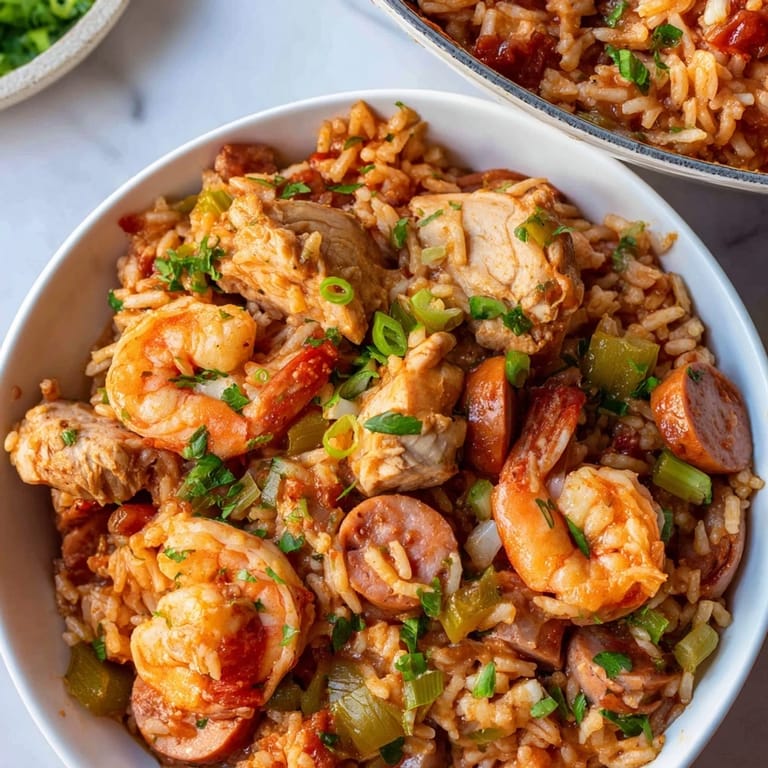
Save This is the kind of meal that brings people together around the table and keeps them there long after the bowls are empty.
Recipe Questions & Answers
- → What makes jambalaya different from other rice dishes?
Jambalaya stands apart because the rice cooks directly in the pot with all ingredients, absorbing flavors from the proteins, vegetables, and spices. Unlike risotto, it requires no constant stirring, and unlike pilaf, the grains remain distinct yet tender while developing a rich, seasoned taste throughout.
- → Can I make jambalaya ahead of time?
Absolutely. Jambalaya actually tastes better the next day as flavors continue to meld. Prepare it completely, refrigerate for up to 3 days, and reheat gently with a splash of broth or water to restore moisture. The texture remains excellent, making it ideal for meal prep or entertaining.
- → What's the best rice for jambalaya?
Long-grain white rice works best as it stays separate during cooking and absorbs liquid without becoming mushy. Avoid short-grain or Arborio varieties. Rinse the rice before adding to remove excess starch, ensuring the final dish has perfectly distinct, tender grains.
- → How can I adjust the spice level?
Start with half the cayenne pepper if you prefer mild heat, then gradually add more to taste. For extra kick, incorporate diced jalapeños with the vegetables or serve with hot sauce on the side. Remember, andouille sausage already brings some heat, so taste before adding additional spice.
- → What proteins work well in jambalaya?
The classic combination includes andouille sausage, chicken thighs, and shrimp, but you can adapt based on preference. Try smoked kielbasa or chorizo instead of andouille, swap shrimp for crawfish, or make it vegetarian with beans and extra vegetables. Each protein adds unique depth to the final dish.