 Save
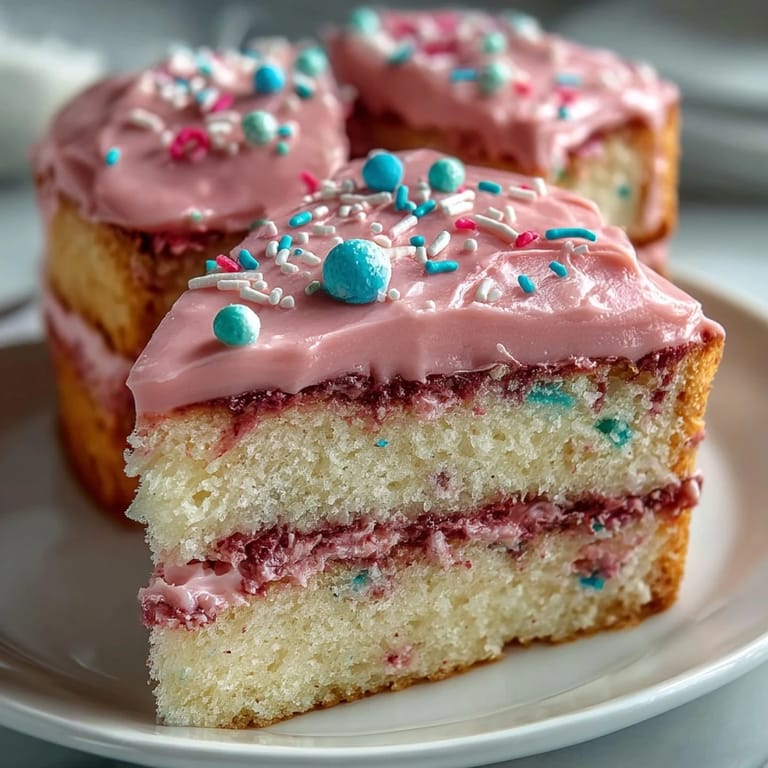
Save My neighbor knocked on the door last April holding a plate of the most cheerful cake I'd ever seen—pastel swirls on vanilla sponge dotted with rainbow sprinkles. She'd made it on a whim for her daughter's birthday and offered me a slice. One bite and I was asking for the recipe, partly because it tasted like spring itself, but mostly because watching her describe the pastel buttercream technique made me realize how much joy lived in the details of baking something deliberately playful.
I made this for a spring potluck after someone mentioned their kid refused to eat anything "boring." Watching her eyes light up when she saw the pastel swirls was worth every minute of the color-mixing phase, especially when her little brother immediately asked for seconds and actually thanked me unprompted.
Ingredients
- All-purpose flour (2 1/2 cups): The backbone of this cake; make sure it's at room temperature if you've stored it in a cold pantry, as cold flour can throw off your rise.
- Baking powder and baking soda (2 1/2 tsp and 1/2 tsp): This duo ensures the cake rises evenly and stays tender; measure carefully because too much makes it taste metallic.
- Unsalted butter (1 cup), room temperature: Room temperature is non-negotiable here—cold butter won't cream properly, and your cake will be dense instead of feathery.
- Granulated sugar (1 1/2 cups): The sugar creamed with butter creates air pockets that make this cake light; don't skip the creaming step even though it takes a few minutes.
- Eggs (4 large), room temperature: Cold eggs will seize the batter and create a gummy texture; pull them from the fridge 20 minutes before you start.
- Pure vanilla extract (2 tsp): Vanilla is the star flavor here, so splurge on pure extract—imitation vanilla will make the cake taste artificial against the buttercream.
- Whole milk and sour cream (1 cup and 1/2 cup), room temperature: The sour cream adds subtle tang and incredible moisture; the combination of milk and sour cream prevents the cake from being too dense.
- Rainbow sprinkles—jimmies only (2/3 cup): Buy quality sprinkles because cheap ones bleed color into the batter; jimmies (the rod-shaped kind) integrate better than nonpareils and stay vibrant.
- Unsalted butter for buttercream (1 1/2 cups), room temperature: This creates the fluffy, spreadable frosting; salted butter will throw off the sweetness balance.
- Powdered sugar, sifted (5 cups): Sifting removes lumps and prevents grainy buttercream; this step feels fussy but it's worth the two minutes.
- Food coloring gels in pastel shades: Gel colors (not liquid drops) give you true pastels without watering down the frosting; liquid food coloring adds moisture and can make buttercream split.
Tired of Takeout? 🥡
Get 10 meals you can make faster than delivery arrives. Seriously.
One email. No spam. Unsubscribe anytime.
Instructions
- Prepare your pans and oven:
- Set your oven to 350°F and give it 15 minutes to preheat while you grease those pans. The parchment paper is your secret to cakes that slide out cleanly without sticking at the edges.
- Mix your dry ingredients:
- Whisk flour, baking powder, baking soda, and salt together in a medium bowl until everything is evenly distributed. This prevents clumpy pockets of baking soda in your finished cake.
- Cream butter and sugar:
- Beat them together for about 3 minutes until the mixture is pale and fluffy—it should look like wet sand with peaks. This aerating step is what gives the cake its tender, almost cloud-like texture.
- Add eggs one at a time:
- Beat well after each egg so it fully incorporates before you add the next one; if you dump them all in at once, the batter will look broken and grainy. This takes patience but pays off in a stable, smooth batter.
- Mix in vanilla:
- Stir in the vanilla extract until it's fully combined.
- Combine milk and sour cream:
- Whisk them together in a separate bowl so they're ready to go; this mixture should look smooth and cohesive.
- Alternate wet and dry ingredients:
- Add the flour mixture in three additions, alternating with the milk mixture and starting and ending with flour. Stir just until combined after each addition—overmixing develops gluten and makes the cake tough.
- Fold in the sprinkles gently:
- Use a spatula to fold them in at the very end so they stay intact and don't bleed color into the batter. Be gentle and patient here.
- Divide and bake:
- Pour batter evenly between your pans and smooth the tops with a spatula. Bake for 28 to 32 minutes until a toothpick inserted in the center comes out clean or with just a few moist crumbs clinging to it.
- Cool with intention:
- Let the cakes rest in the pans for 10 minutes, then turn them out onto a wire rack to cool completely. This waiting period is important—frosting warm cake will make it melt and slide around.
- Beat butter until smooth:
- For the buttercream, beat the butter alone for about 2 minutes until it's creamy and pale. This step matters because it makes the frosting light and spreadable.
- Add powdered sugar gradually:
- Mix on low speed until the sugar is incorporated, then increase speed and beat until fluffy. This prevents sugar clouds from puffing up and coating your kitchen.
- Add milk, vanilla, and salt:
- Beat on high for 2 to 3 minutes until the buttercream is fluffy and smooth. If it's too thick, add milk one teaspoon at a time; if it's too soft, refrigerate it for 10 minutes.
- Divide and tint with color:
- Split the buttercream into 4 bowls and add pastel gels one color at a time, stirring gently. Start with just a tiny dab of gel because these colors deepen as you mix.
- Decorate with confidence:
- Dollop or pipe the colored buttercream onto the cooled cake layers, then swirl the colors together with a knife or small spatula for a marbled effect. The pastels create a beautiful watercolor look when you work them together.
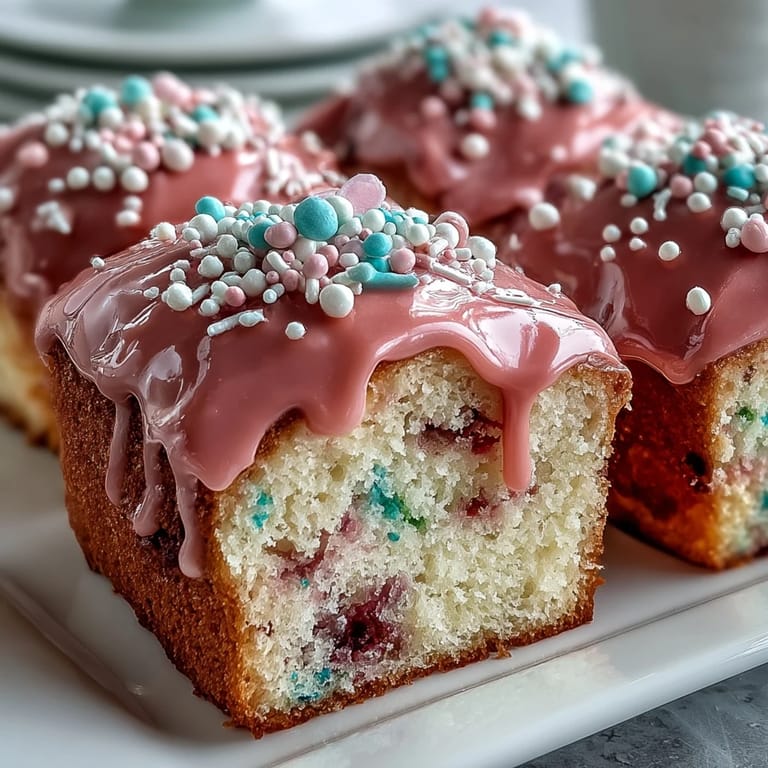 Save
Save There's a quiet moment when you finish decorating and step back to see the whole cake, pastel swirls glowing under the kitchen light. It feels like you've made something that brings actual happiness instead of just calories.
The Sour Cream Secret
Most vanilla cakes are forgettable because they're either too dry or too sweet, with a crumb that falls apart on your fork. Adding sour cream changed everything—it adds moisture and a subtle tang that makes people pause mid-bite and try to figure out what they're tasting. The sour cream also makes the cake tender because the acidity reacts with the baking soda, creating a more delicate structure. It's one of those baking secrets that feels small until you taste the difference.
Why Pastels Work Better Than Bold Colors
Bold, bright colors in buttercream can feel like you're serving candy rather than cake, and gel food coloring at full strength gets overwhelming. Pastel colors look sophisticated and spring-like because they're soft and whimsical at the same time—they hint at color without shouting it. The marbled effect where colors blend together actually looks more intentional and beautiful than a single color, and it photographs the way you imagined it would. Pastels also won't stain your tongue or teeth, which is a blessing when you're eating cake with people you care about.
Storage, Serving, and Special Occasions
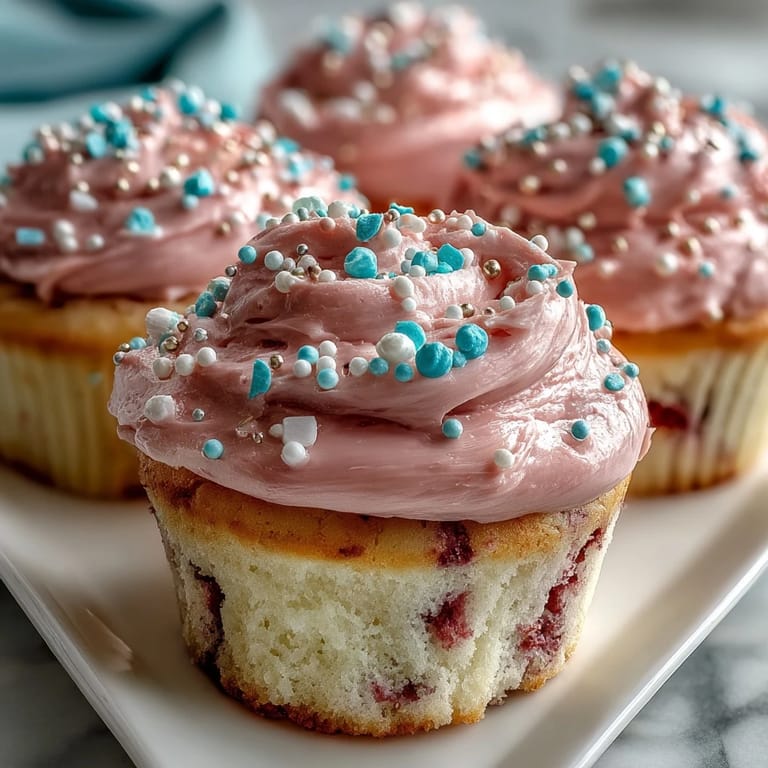
This cake stays fresh for three days at room temperature in an airtight container, though the buttercream will be softest on day one when it's just been frosted. You can bake the layers a day ahead and freeze them wrapped in plastic wrap, then frost and decorate on the day you need them. For cupcakes instead of layers, fill muffin cups three-quarters full and bake for 22 to 24 minutes; they're perfect for potlucks and easier to transport than a layer cake. This cake pairs beautifully with sparkling Moscato, cold lemonade, or simply a tall glass of whole milk.
- Make the cake layers a day ahead and freeze them to reduce last-minute stress.
- If your buttercream gets too soft while decorating, chill it for 15 minutes and start again.
- The pastel colors are best made with gel food coloring because it won't change the texture of your frosting like liquid coloring does.
 Save
Save Baking this cake transforms an ordinary afternoon into something intentional and kind. Serve it knowing you've made something that tastes as good as it looks.
Recipe Questions & Answers
- → What type of sprinkles work best?
Use jimmies-type rainbow sprinkles to avoid color bleeding during baking, ensuring vibrant specks throughout.
- → Can sour cream be substituted?
Yes, Greek yogurt makes a suitable substitute that keeps the batter moist and tender without altering flavor noticeably.
- → How do I achieve the pastel colors in the buttercream?
Divide the buttercream into portions and add a few drops of gel food coloring in pink, blue, yellow, and purple for soft, vibrant tones.
- → What is the best baking time for cupcakes?
Bake cupcakes for 22 to 24 minutes, adjusting for size while maintaining a clean toothpick test for doneness.
- → How should the cake be cooled before decorating?
Let cakes cool in pans for 10 minutes, then transfer to a wire rack to cool completely to avoid melting the buttercream.