 Save
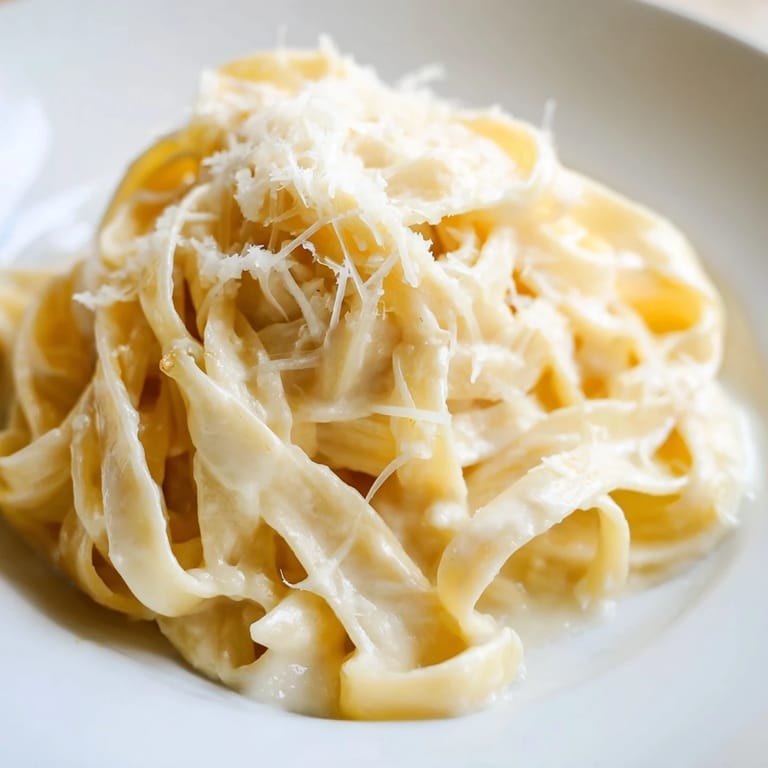
Save There's a certain quiet satisfaction that comes from pulling something so simple out of the oven and watching it transform an entire meal. I started roasting garlic in bulk years ago, mostly because I hated peeling cloves one by one. Now, those sweet, caramelized heads live in my fridge like little flavor bombs waiting to happen. This pasta was born on a Wednesday night when I had exactly one bulb of roasted garlic left, a carton of cream that needed using, and zero energy for anything complicated. It tasted like I'd been cooking all day.
I made this for my sister the night she came over after a long shift at the hospital. She sat at the counter, still in her scrubs, and barely said a word until the first bite. Then she looked up and said it tasted like a hug. I've never forgotten that. Sometimes the best meals aren't the fancy ones, they're the ones that show up exactly when someone needs comfort without asking for it.
Ingredients
- Whole garlic bulbs: Roasting transforms them into something creamy and almost sweet, you'll want to keep extras on hand for everything.
- Olive oil: Just enough to keep the garlic from drying out in the oven and to help the cloves turn golden.
- Fettuccine or spaghetti: Wide noodles hold the sauce beautifully, but use whatever pasta shape makes you happy.
- Heavy cream: This is what makes the sauce luxurious and silky, no shortcuts here.
- Milk: Loosens the cream just enough so the sauce doesn't feel too rich or cloying.
- Unsalted butter: Adds a velvety finish and helps the shallots soften without browning too fast.
- Shallot: Milder than onion, it melts into the sauce and adds a gentle aromatic backbone.
- Parmesan cheese: Freshly grated is the only way, the pre-shredded stuff won't melt properly and has a weird texture.
- Black pepper and salt: Simple seasoning that lets the roasted garlic shine without competing.
- Nutmeg: Optional, but a tiny pinch adds warmth and a subtle complexity that people can't quite place.
- Fresh parsley: A handful of green at the end makes it look less beige and taste a little brighter.
Tired of Takeout? 🥡
Get 10 meals you can make faster than delivery arrives. Seriously.
One email. No spam. Unsubscribe anytime.
Instructions
- Roast the garlic:
- Preheat your oven to 200°C (400°F), slice the tops off the garlic bulbs to expose the cloves, drizzle with olive oil, and wrap each bulb tightly in foil. Roast for 35 to 40 minutes until the cloves are soft, golden, and smell like heaven.
- Cook the pasta:
- Bring a large pot of salted water to a rolling boil and cook your pasta until al dente, following the package timing. Before draining, scoop out half a cup of that starchy pasta water, it's your secret weapon for a silky sauce.
- Sauté the shallot:
- Melt the butter in a large skillet over medium heat, add the finely chopped shallot, and cook gently for about 2 minutes until it softens and turns translucent. You want it sweet, not browned.
- Add the roasted garlic:
- Squeeze the cooled garlic cloves out of their skins, mash them into a rough paste with a fork, and stir them into the skillet. Let them cook for about a minute, stirring, until the whole kitchen smells incredible.
- Build the cream sauce:
- Pour in the cream and milk, whisking gently to combine, then bring the mixture to a gentle simmer. Let it bubble softly for 3 to 4 minutes until it thickens just enough to coat the back of a spoon.
- Finish the sauce:
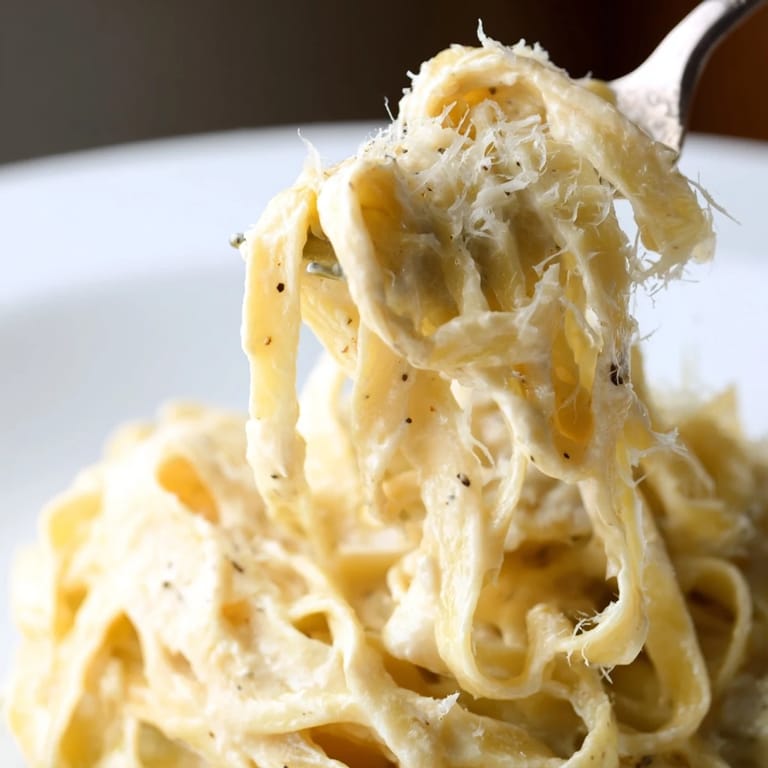
- Stir in the Parmesan, salt, pepper, and nutmeg if you're using it, and keep stirring until the cheese melts completely and the sauce turns glossy. Taste it now, this is your moment to adjust the seasoning.
- Toss the pasta:
- Add the drained pasta directly to the skillet and toss everything together, adding splashes of reserved pasta water as needed to loosen the sauce. The sauce should cling to every strand without pooling at the bottom.
- Serve:
- Plate the pasta immediately while it's still steaming, and finish with extra Parmesan and a sprinkle of parsley if you have it. Serve it hot, with good bread and someone you like.
 Save
Save One night I made this for a small dinner party and forgot to put out the fancy napkins or light the candles. Nobody noticed. They were too busy twirling pasta and scraping their plates clean. It reminded me that the meal itself is the hospitality, not the props around it. Good food has a way of making everything else feel secondary.
How to Store and Reheat Leftovers
Cream sauces don't love the fridge, but this one holds up better than most. Store leftovers in an airtight container for up to 3 days. When you reheat it, do it gently in a skillet over low heat with a splash of milk or cream to bring the sauce back to life. The microwave works in a pinch, but stir it halfway through and add a little liquid so it doesn't dry out or separate.
Variations You Might Love
I've added sautéed mushrooms, wilted spinach, and even crispy pancetta to this base, and it's welcomed every addition. If you want to make it lighter, swap half the cream for half and half or even whole milk, just know the sauce won't be quite as rich. You can also toss in a handful of peas, some sun dried tomatoes, or roasted cherry tomatoes for color and a little tang. This recipe is forgiving, so trust your instincts and use what you have.
Pairing and Serving Suggestions
This pasta is rich enough to be the main event, but it loves company. A simple arugula salad with lemon and olive oil cuts through the cream beautifully. Garlic bread feels redundant unless you roast a few extra cloves and smear them on crusty sourdough. For wine, I lean toward something crisp and bright, a Pinot Grigio or Sauvignon Blanc keeps things balanced without getting lost.
- Serve it in wide, shallow bowls so the sauce doesn't hide at the bottom.
- Finish each plate with a drizzle of good olive oil and an extra crack of black pepper.
- Pair it with a light dessert like lemon sorbet or panna cotta, nothing too heavy.
 Save
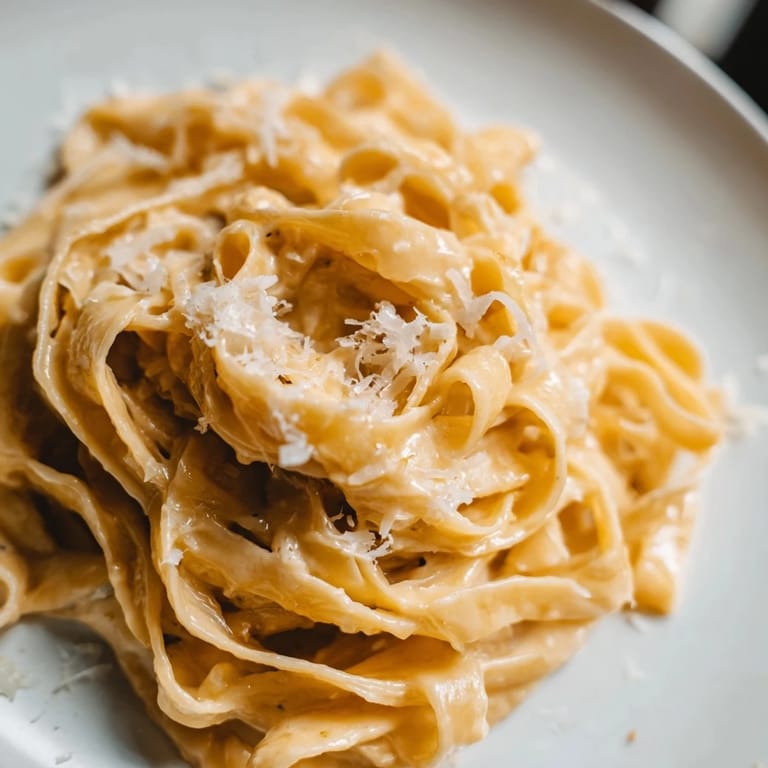
Save This is the kind of meal that asks for nothing but gives you everything: comfort, flavor, and a few quiet minutes at the table. Make it on a weeknight, make it for someone you love, or make it just for yourself with a good book nearby.
Recipe Questions & Answers
- → How do I know when the garlic is properly roasted?
The garlic bulbs are ready when the cloves become soft, golden, and caramelized, usually after 35-40 minutes at 200°C. The cloves should squeeze out easily from their skins and have a sweet, mellow flavor rather than sharp or raw taste.
- → Can I make this dish ahead of time?
You can roast the garlic up to 2 days in advance and store it in an airtight container. However, prepare the cream sauce fresh just before serving for the best texture and flavor. Cook the pasta fresh as well to maintain its al dente consistency.
- → What's the best way to prevent the sauce from breaking?
Keep the heat at medium or medium-low throughout. Avoid boiling vigorously. When adding cream and milk, whisk gently to combine. If the sauce looks too thick, add reserved pasta water one splash at a time while stirring continuously.
- → Can I substitute the heavy cream for a lighter option?
Yes, you can replace heavy cream with half-and-half, whole milk, or a combination. The sauce will be lighter and less rich, but still delicious. You may need to simmer slightly longer for the sauce to thicken properly.
- → What pasta shapes work best with this cream sauce?
Flat ribbon pastas like fettuccine or tagliatelle work wonderfully as they hold the cream sauce beautifully. Long thin pastas like spaghetti or linguine also work well. Avoid very short pastas like penne as they don't coat as elegantly with this sauce.
- → How do I store leftovers and reheat them?
Store in an airtight container in the refrigerator for up to 2 days. Reheat gently in a skillet over low heat, adding a splash of milk or pasta water to restore the creamy consistency. Avoid high heat, which can cause the sauce to separate.