 Save
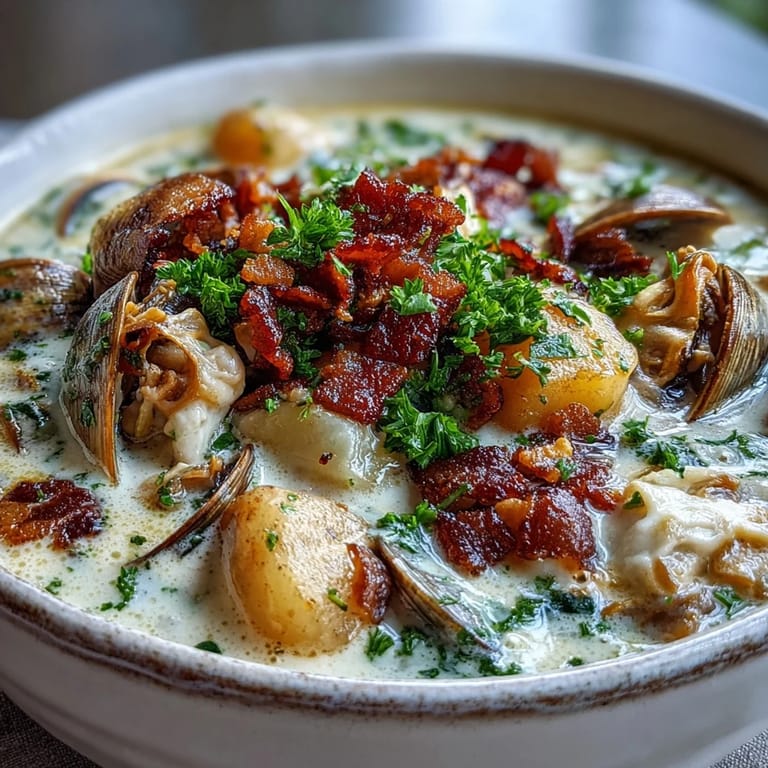
Save There's something about the fog rolling in off the Atlantic that makes you crave a bowl of New England clam chowder. I learned to make this soup on a grey October afternoon when my neighbor knocked on the door with a bucket of freshly dug littlenecks from the harbor, and I realized I had no idea what to do with them. By the time that first spoonful touched my lips, creamy and briny and studded with tender clams, I understood why this dish has been sustaining coastal families for centuries.
I served this chowder at a dinner party during the first real cold snap of the year, and I watched my guests go quiet mid-conversation, their spoons moving steadily from bowl to mouth. Someone asked for seconds before finishing their first bowl, and that's when I knew I'd gotten it right. The soup had that magical quality where every ingredient was distinct but somehow working together like an old jazz ensemble.
Ingredients
- Fresh clams or canned: Two pounds of littlenecks are ideal if you can get them from a fishmonger you trust, but don't hesitate to use canned if fresh aren't available, since the flavor difference won't ruin anything.
- Salt pork or bacon: This renders down into the fat that becomes the foundation of everything else, so don't skip it even if bacon feels like a shortcut.
- Yukon Gold potatoes: These hold their shape better than russets and add a subtle sweetness that balances the brininess of the clams.
- Onion and celery: The aromatic base that gives the soup its savory backbone, and cooking them just until soft means they disappear into the broth rather than announcing themselves.
- Butter, cream, and milk: The cream is what makes this a New England chowder and not Manhattan red, so commit to the richness.
- Clam juice: Bottled clam juice is reliable, but if you've steamed fresh clams, that liquid gold you reserved becomes part of your broth and carries deeper flavor.
- Bay leaf and thyme: Just enough to whisper herbs rather than shout them, which is how this soup should taste.
- Fresh parsley: Stirred in at the end for brightness and a small visual reminder that this came from fresh ingredients.
Tired of Takeout? 🥡
Get 10 meals you can make faster than delivery arrives. Seriously.
One email. No spam. Unsubscribe anytime.
Instructions
- Prepare your clams if using fresh:
- Scrub them under cold running water until the shells feel clean, then steam them in a covered pot with a cup of water over medium heat until they crack open, roughly 6 to 8 minutes. Discard any that stubbornly refuse to open, chop the meat into bite-sized pieces, and strain that cooking liquid into a bowl because it's liquid gold for your soup.
- Render the salt pork or bacon:
- Dice it into small pieces and cook it slowly in your Dutch oven over medium heat until the fat has released and the meat has turned crispy and brown. Use a slotted spoon to pull out the solids, leaving all that rendered fat behind because it's your base.
- Build your aromatic base:
- Add butter to the pot with the bacon fat, then add diced onion and celery, letting them soften for about 5 minutes without browning. Add minced garlic and cook for just another minute until the whole pot smells like the reason people cook in the first place.
- Make a roux:
- Sprinkle flour over the vegetables and stir it in, then let it cook for 2 minutes while you stay near the stove, watching it deepen slightly in color. This flour thickens the chowder and adds a subtle toasted flavor.
- Add the liquids carefully:
- Pour in your clam juice slowly while whisking to prevent lumps from forming, then add the milk and cream in the same careful way. Stir frequently to make sure everything stays smooth and creamy.
- Simmer the potatoes:
- Add your diced potatoes along with the bay leaf and thyme, then let everything simmer gently for 12 to 15 minutes until the potatoes are tender when you poke them with a fork. Stir occasionally so nothing sticks to the bottom.
- Bring in the clams:
- Add the clam meat and any reserved juices back into the pot, along with the crispy bacon you set aside, and let it all simmer together for just 3 to 5 minutes. This is crucial: don't boil the chowder once the clams are in, because clams toughen if they get too hot.
- Finish and season:
- Remove the bay leaf, stir in fresh parsley, then taste and adjust the salt and pepper until it feels right to you. Remember that clams are salty, so taste before you add too much.
 Save
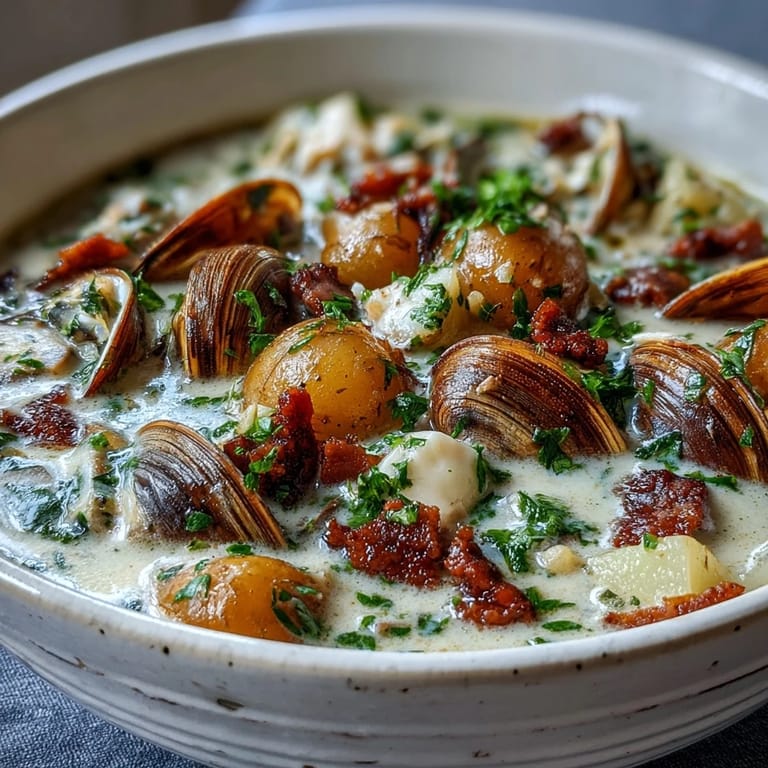
Save I remember my grandfather asking for a second helping of this chowder years ago, and when I asked him if it was as good as his mother's, he looked at his bowl and said mine was different but that maybe different was its own kind of good. That moment taught me that cooking isn't about replicating the past but about honoring it while making something your own.
The Story Behind New England Clam Chowder
This soup exists because fishermen needed food that was hearty, kept well, and used what was abundant in their waters. Clams, potatoes, and salt pork were cheap and available, and when combined with butter and cream, they became something far greater than their individual parts. The dish has been feeding people along the New England coast for centuries, and every cook who makes it adds their own small imprint, which is exactly how it should be.
Fresh Clams vs. Canned: Which Should You Use
Fresh clams are wonderful if you have access to them and the time to scrub and steam them, but canned clams deliver reliable flavor and let you skip several steps. I've made this soup both ways, and honestly, the difference in the final bowl is smaller than you might think. What matters more is using good cream and not skimping on the bacon, because those two things are what make this chowder taste like something worth eating on a cold night.
Serving and Storage Wisdom
This chowder is best served hot in deep bowls with oyster crackers on the side, and the soup tastes even better the next day after the flavors have had time to get to know each other. Store it in the refrigerator for up to three days, and when you reheat it, do so gently over low heat to avoid breaking the cream.
- If the chowder thickens too much as it sits, thin it with a splash of milk or clam juice when you reheat it.
- Oyster crackers or crusty bread are the only acceptable companions, though a crisp white wine doesn't hurt either.
- This soup freezes reasonably well, though the texture of the potatoes will be softer when thawed, which is still delicious if you don't mind.
 Save
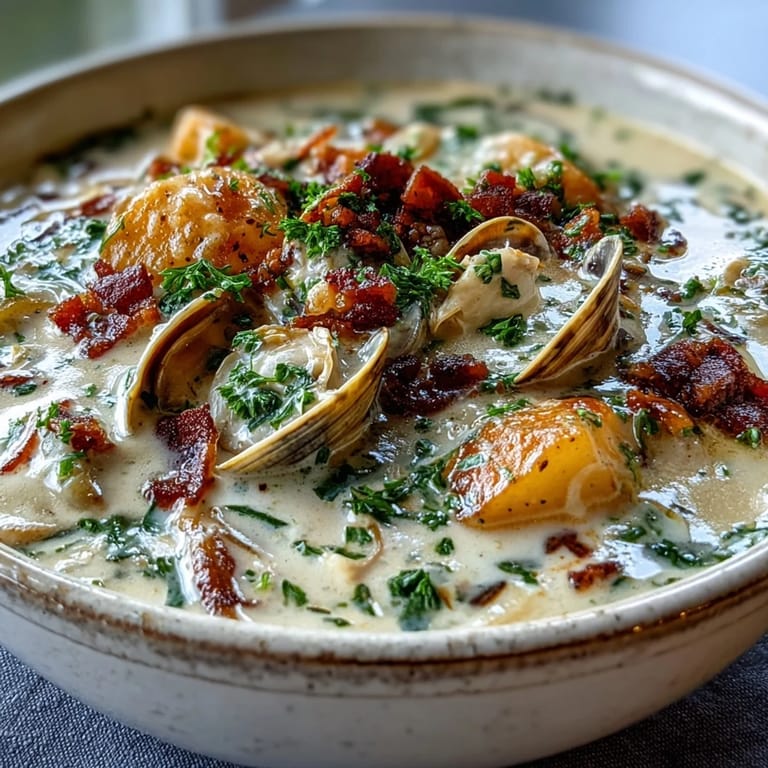
Save This is the kind of soup that makes you understand why people gather around tables in the first place. Make it for someone who matters to you, and watch what happens.
Recipe Questions & Answers
- → Can I use canned clams instead of fresh?
Yes, 2 cups of canned chopped clams with their juice work perfectly. Reserve the clam juice to use as part of your liquid base for maximum flavor.
- → What type of potatoes work best?
Yukon Gold or russet potatoes are ideal. Yukon Golds offer a buttery texture, while russets provide a fluffier consistency. Both hold their shape well during simmering.
- → Can I substitute the salt pork?
Thick-cut bacon makes an excellent substitute, adding a smoky depth. Simply dice and render the fat the same way you would with salt pork.
- → How do I prevent the chowder from curdling?
Avoid boiling after adding the dairy and clams. Keep the heat at a gentle simmer and stir occasionally to maintain a smooth, creamy consistency throughout.
- → How should I store leftovers?
Refrigerate in an airtight container for up to 3 days. Reheat gently over low heat, stirring frequently. Avoid microwaving on high to prevent separation of the cream base.
- → Can I make this lighter without sacrificing flavor?
Replace heavy cream with half-and-half for a lighter texture while maintaining richness. The clam juice and properly rendered salt pork will still provide substantial depth of flavor.