 Save
Save There's something almost magical about the smell of tomatoes collapsing into caramel in a hot oven—it's nothing like raw tomato, it's deeper and more mysterious. I discovered this soup by accident one autumn when my neighbor brought over a basket of late-season tomatoes I didn't know how to use fast enough. Instead of panic, I roasted them out of pure curiosity, and by the time they emerged blistered and golden, my kitchen smelled like a Italian trattoria. That one evening taught me that sometimes the simplest approach to vegetables reveals their truest flavor.
I made this for my partner on a gray Wednesday night when neither of us had the energy to go out, and watching them taste it, close their eyes, and immediately ask for seconds—that's when I knew I'd stumbled onto something real. The cream swirled through the bowl caught the kitchen light, and it felt fancy without being fussy, which is exactly the kind of cooking I want to do.
Ingredients
- Ripe tomatoes, halved: Quality matters here more than anywhere else in the recipe, so choose tomatoes that smell fragrant at the stem end and feel slightly soft to the touch.
- Onion and garlic: These mellow and sweeten under the heat, becoming almost caramelized—they're not a background flavor but a core part of what makes this soup rich.
- Olive oil: Use something you actually like tasting because it won't hide in this simple soup.
- Salt, pepper, and smoked paprika: The paprika is optional but honestly worth the small effort, it adds a subtle warmth that makes people ask what your secret ingredient is.
- Vegetable broth: Don't use anything too aggressively seasoned since you're building flavor from the roasted vegetables themselves.
- Tomato paste: Just one tablespoon, but it concentrates and deeps the tomato flavor without making it taste canned.
- Sugar: A tiny pinch only if your tomatoes were picked before their prime and taste too acidic, which is totally normal and fixable.
- Heavy cream: The finish that makes this creamy rather than watery, swirled in right before serving so it stays luscious.
- Fresh basil: Add it before blending so the flavor infuses throughout, then save some leaves for garnish because they brighten everything.
- Day-old bread for croutons: Slightly stale bread actually works better than fresh because it crisps up instead of turning into a rubber crumb.
Tired of Takeout? 🥡
Get 10 meals you can make faster than delivery arrives. Seriously.
One email. No spam. Unsubscribe anytime.
Instructions
- Heat your oven and prep the vegetables:
- Preheat to 425°F (220°C), then arrange your tomato halves cut side up on a baking sheet with the onion quarters and peeled garlic cloves, making sure everything has room to breathe. Drizzle generously with olive oil, season with salt, pepper, and smoked paprika if using, then slide it in to roast.
- Roast until the edges turn dark and caramelized:
- This takes 25 to 30 minutes, and you'll know it's ready when the tomato edges have deep brown spots and the kitchen smells absolutely irresistible. The vegetables should look almost charred in spots—that's where the magic happens.
- Make the croutons while vegetables roast:
- Toss your bread cubes with olive oil, garlic powder, salt, and dried oregano, spread them on a separate baking sheet, and bake for 8 to 10 minutes until they're golden and snap when you bite one. These can be done before, during, or after the roasting since they only need a short time in the oven.
- Build the soup base:
- Transfer your roasted vegetables to a large pot, add the vegetable broth and tomato paste, and let it simmer gently for about 5 minutes so the flavors start mingling. Then tear in your fresh basil leaves—they'll begin releasing their aroma immediately.
- Blend until smooth and silky:
- Use an immersion blender right in the pot, blending until you reach a completely smooth texture, or if you prefer, carefully transfer to a countertop blender in batches (letting it cool slightly first). The consistency should be velvety, almost pourable but substantial.
- Finish and adjust seasoning:
- Return everything to the pot if you used a blender, then stir in your heavy cream gently so it doesn't break or separate. Taste it now and add that optional pinch of sugar if the tomato flavor feels too sharp, then adjust salt and pepper to your liking, but keep the heat low and never let it boil or the cream will get grainy.
- Serve with all the toppings:
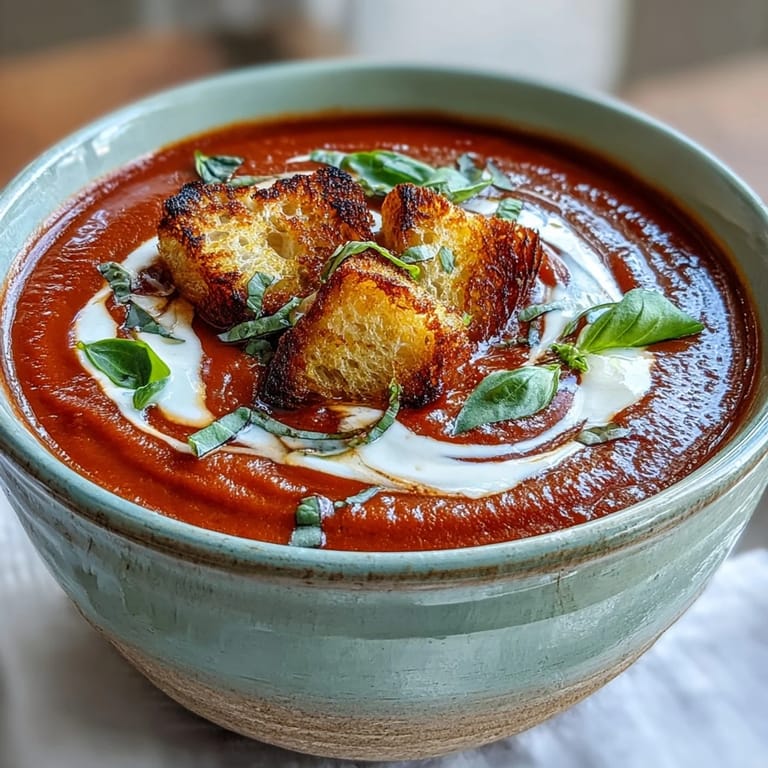
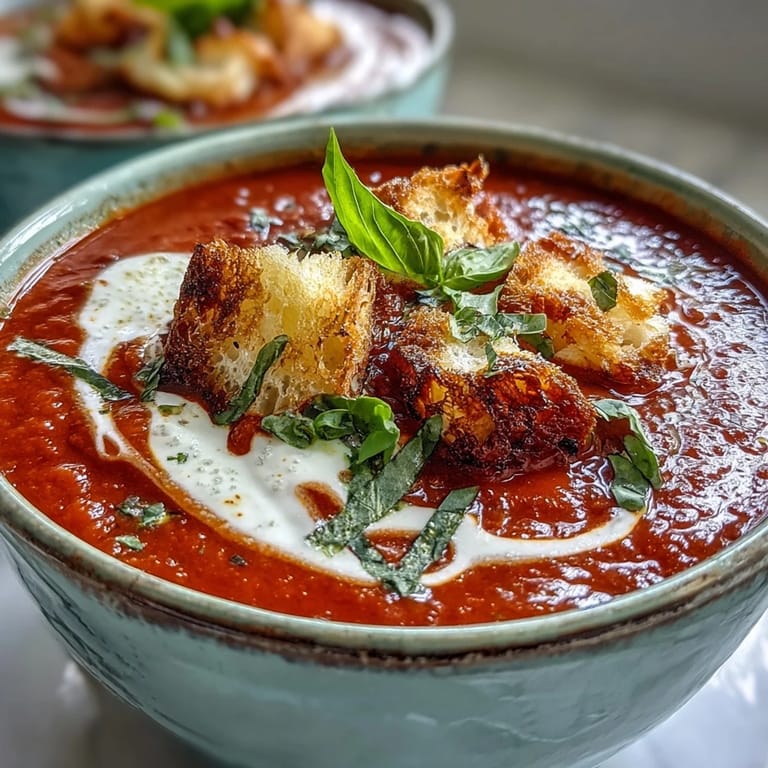
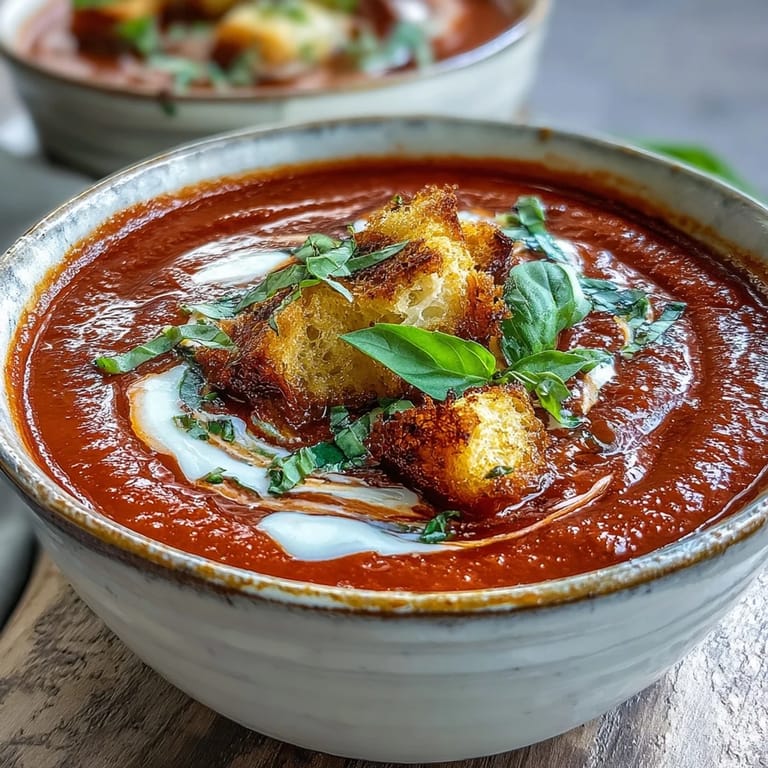
- Ladle into bowls, then swirl with a little extra cream (it'll create those pretty white lines), scatter croutons generously, and place a few torn basil leaves on top. Serve right away while the croutons are still crispy.
 Save
Save There was an evening when I made this soup for my mother who was recovering from a cold, and something shifted when she took that first spoonful—it wasn't just nutrition, it was comfort in a bowl, proof that simple cooking done with attention actually matters. Food like this reminds you that feeding someone is one of the most direct ways to say I care.
Why Roasting Changes Everything
Raw tomatoes are bright and acidic, but roasting them at high heat for half an hour does something chemistry-wise that transforms them into something almost sweet and complex. The water cooks off, the sugars concentrate, and the cut sides that touch the baking sheet develop those burnished edges that taste like caramel. This is why this soup tastes nothing like blended raw tomatoes—it's a completely different ingredient by the time it hits the pot.
The Texture Question
Some people blend their tomato soup until it's completely smooth and almost silky, while others leave it slightly chunky with flecks of roasted vegetable throughout. I've done it both ways, and honestly, smooth feels more elegant, but chunky feels more honest, so it depends on your mood and who you're serving. Neither is wrong, it's just a choice about what kind of experience you want.
Variations That Work
This soup is flexible enough to adapt to what's in your kitchen or what dietary needs you have, and each change brings something interesting. The only thing that feels essential is the roasting step, everything else can shift and the soup stays delicious.
- For vegan or dairy-free, swap the heavy cream with coconut cream or cashew cream and it becomes richer, almost luxurious in a different way.
- Add a handful of fresh spinach when you blend it for earthiness, or a pinch of red pepper flakes if you want heat.
- Use half fresh tomatoes and half good quality canned if you can't find perfect fresh ones—they blend beautifully together.
 Save
Save This soup has become one of those recipes I return to whenever I need to remind myself why I love cooking—it's proof that you don't need fancy techniques or long ingredient lists to make something genuinely delicious. Make it for someone you love, or just for yourself on a day when you want the kitchen to smell incredible.
Recipe Questions & Answers
- → Can I make this soup vegan?
Yes, simply substitute the heavy cream with coconut cream or your favorite plant-based cream alternative for a delicious vegan version.
- → Can I use canned tomatoes instead of fresh?
Absolutely. You can use a mix of fresh and canned tomatoes for deeper flavor, or substitute entirely with 28 oz canned whole tomatoes.
- → How do I store leftover soup?
Store the soup in an airtight container in the refrigerator for up to 4 days. Store croutons separately to maintain crispness. Reheat gently on the stovetop.
- → Why add sugar to tomato soup?
Sugar helps balance the natural acidity of tomatoes, creating a more rounded flavor. Add it gradually and taste as you go to find your preferred balance.
- → Can I freeze this soup?
Yes, this soup freezes well for up to 3 months. Freeze before adding cream, then stir in fresh cream when reheating for best texture and flavor.
- → What can I serve with this soup?
A grilled cheese sandwich is the classic pairing. You can also serve with crusty bread, a fresh green salad, or a simple caprese salad for a complete meal.