 Save
Save There's something about the smell of ginger hitting hot oil that stops me mid-thought every single time. Years ago, I was going through my freezer on a gray Tuesday afternoon when I found a bag of carrots that had seen better days, and next to it, a knob of ginger I'd forgotten about. What started as a way to use things up became this golden soup that now appears on my table whenever I need something warm and honest. The sweetness of the carrots plays against that gentle heat, and somehow it feels both simple and special.
I made this soup for my neighbor when she came home from the hospital, ladling it into her favorite bowl because I knew she loved anything with ginger. She ate it sitting in her kitchen window seat, and later told me it was the first thing that day that felt like nourishment rather than obligation. That's when I realized this soup does something beyond just filling a stomach—it wraps around you.
Ingredients
- Olive oil: One tablespoon is enough to build the flavor base without making the soup heavy; I've learned that quality matters here since it's one of the few unmixed elements.
- Onion: A medium onion, diced, acts as the foundation—when it turns translucent, you know the pot is ready for what comes next.
- Garlic cloves: Two cloves, minced fine, release their aromatic oils quickly and keep the soup from tasting flat.
- Carrots: Seven hundred grams of fresh carrots are the heart of this; they soften into sweetness and give the soup its silky texture.
- Fresh ginger: Two tablespoons grated does the real work—it's warm without being aggressive, adding character that lingers pleasantly.
- Vegetable broth: One liter gives you enough body; I prefer the unsalted kind so I can season as I taste.
- Coconut milk: Optional at a quarter liter, but when you add it, the soup becomes luxurious and feels like a gift to yourself.
- Sea salt and black pepper: Simple seasoning, but taste as you go because every broth is different.
- Lemon juice: Half a lemon's worth brightens everything at the end, a trick I learned from watching my mother cook.
Tired of Takeout? 🥡
Get 10 meals you can make faster than delivery arrives. Seriously.
One email. No spam. Unsubscribe anytime.
Instructions
- Build your base:
- Heat the olive oil in a large pot over medium heat, then add the diced onion. Watch it soften for three to four minutes until it turns translucent and starts smelling sweet—this is when you know the pan is ready for the next layer.
- Wake up the aromatics:
- Stir in the minced garlic and grated ginger, letting them cook together for just one minute. The kitchen will smell incredible, and that's your signal to move forward before they brown.
- Add the carrots:
- Toss in the sliced carrots and give them a gentle stir for about two minutes. You're not cooking them yet, just coating them in the flavored oil so they absorb all the background notes.
- Simmer until tender:
- Pour in the vegetable broth, bring everything to a boil, then lower the heat and cover the pot. Let it bubble gently for twenty to twenty-five minutes until you can easily break a carrot slice with a wooden spoon.
- Blend into silk:
- Remove the pot from heat and use an immersion blender to puree the soup until it's completely smooth and velvety. If you're using a countertop blender, work in batches and be careful with the hot liquid—let it cool just enough first.
- Finish and adjust:
- Stir in the coconut milk if you're using it, add the lemon juice, then taste and season with salt and pepper. Warm everything gently for two to three minutes without letting it boil, adjusting the seasoning until it tastes exactly how you want it.
- Serve with intention:
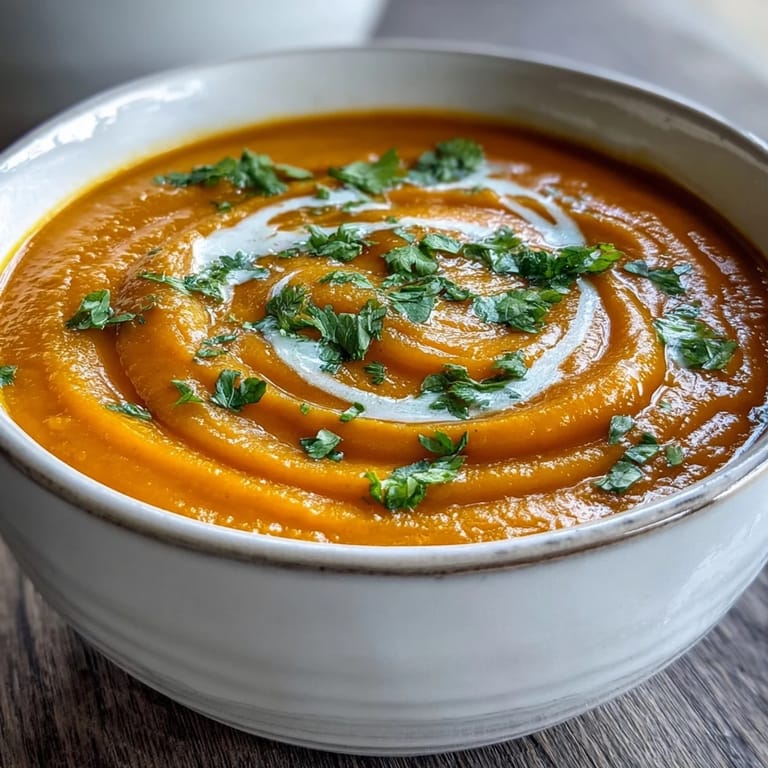
- Ladle the soup into bowls and add a final drizzle of coconut milk or a sprinkle of fresh herbs if you have them. A piece of crusty bread alongside turns this into something complete.
 Save
Save I think about my friend's kitchen window again, how she told me later that this soup became her routine on mornings when everything felt uncertain. Sometimes food is just sustenance, and sometimes it's the small thing that steadies you.
Making It Your Own
This soup loves customization in ways that feel natural and unforced. If you want depth, a pinch of ground cumin or coriander stirred in with the ginger adds an earthy warmth that surprises you in the best way. For texture preferences, you can blend it until it's silky smooth, or leave it a bit chunky if you want to feel the carrots as you eat. Coconut milk is wonderful, but heavy cream works beautifully too, and honestly, nothing at all makes it lighter and just as satisfying.
Storage and Keeping
This soup keeps well in the refrigerator for up to four days in an airtight container, and it actually tastes better the next day once the flavors have had time to get to know each other. You can freeze it too, though I'd recommend leaving out the coconut milk and adding it fresh when you reheat, because it tends to separate. Reheating is gentle work—low heat on the stovetop with a splash of water if needed, stirring occasionally until it's warm through.
What to Serve Alongside
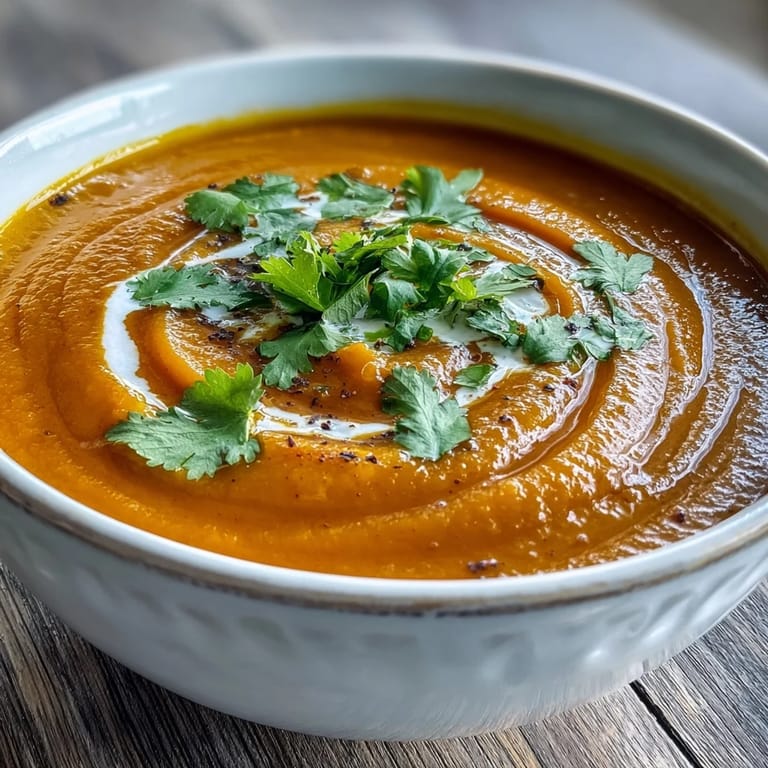
The best companion to this soup is something with substance and texture, something that lets you build bites rather than just have spoons of silk. I've had it with crusty bread that you tear and dip, with grilled cheese cut into squares for dunking, and once with herbed flatbread that made the whole meal feel festive. Consider topping the soup itself with fresh cilantro, parsley, toasted pumpkin seeds, or a drizzle of good olive oil—something that adds contrast and keeps your palate interested.
- Crusty bread toasted with garlic and herbs transforms this into a complete, warming meal.
- A simple green salad alongside cuts through the richness and brings freshness to the table.
- Any of these garnishes matter more than you'd think—they're the final note that makes the soup feel intentional.
 Save
Save There's comfort in knowing you can make something this good with your own hands, something that warms people from the inside out. Every time you make it, it's a small kindness you're offering—to others, or just to yourself.
Recipe Questions & Answers
- → Can I make this soup without coconut milk?
Yes, you can omit the coconut milk for a lighter version, or substitute with heavy cream for a different richness. The soup will still be delicious and creamy from the blended carrots.
- → How do I store leftover carrot ginger soup?
Store in an airtight container in the refrigerator for up to 4 days. Reheat gently on the stovetop, stirring occasionally. You can also freeze it for up to 3 months.
- → What can I use instead of fresh ginger?
While fresh ginger provides the best flavor, you can substitute with 1 teaspoon of ground ginger. Add it with the spices, but note that the flavor will be slightly different and less vibrant.
- → Can I add protein to this soup?
Absolutely! Consider adding cooked chickpeas, white beans, or shredded chicken. You can also top with toasted nuts or seeds for added protein and texture.
- → Why add lemon juice at the end?
Lemon juice brightens the flavors and balances the sweetness of the carrots. Adding it at the end preserves its fresh, citrusy notes and prevents the acidity from dulling during cooking.
- → What's the best way to achieve a silky smooth texture?
Ensure carrots are very tender before blending, and blend for at least 2 minutes. An immersion blender works well, but a countertop blender creates the smoothest result. Strain through a fine-mesh sieve for ultimate silkiness.