 Save
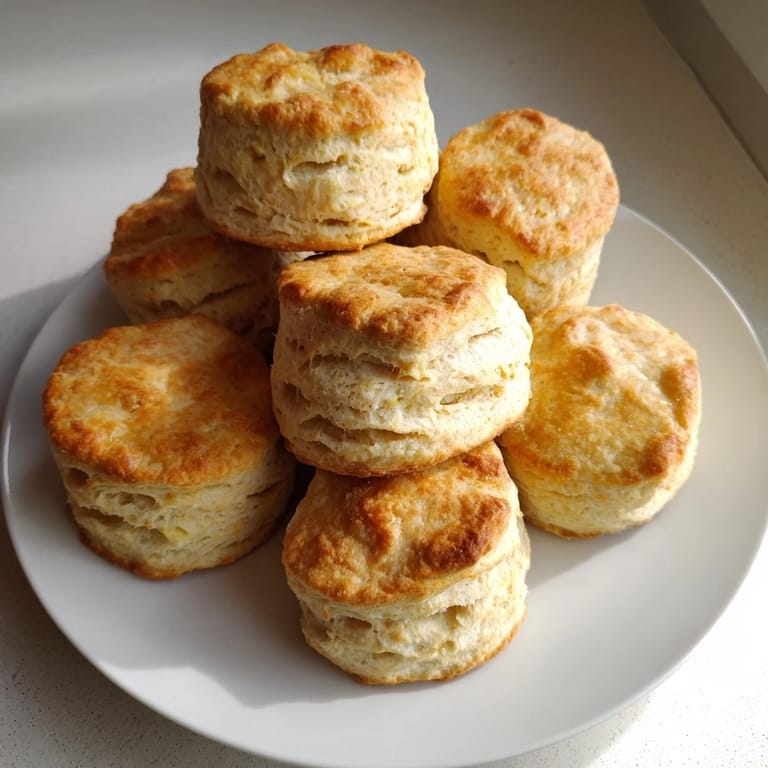
Save My grandmother never measured anything when making biscuits, she just knew by the feel of the dough when it was right. I spent countless Sunday mornings watching her hands work flour and butter together, trying to memorize the way she pressed and folded. When she finally let me try, I made such a mess that we both ended up laughing flour all over the kitchen. Those moments taught me that biscuits are about patience and touch, not just following steps.
Last winter, during that terrible ice storm that kept us home for three days, I made batch after batch of these biscuits. My roommate and I ate them warm with honey, watching the ice coat the windows, grateful for simple comforts. Something about a hot biscuit fresh from the oven makes any situation feel a little more manageable.
Ingredients
- All-purpose flour: The protein structure here gives biscuits their rise without making them tough
- Cold butter: Keeping it very cold is what creates those flaky layers we all love
- Buttermilk: This adds tenderness and a subtle tang that regular milk cannot provide
- Baking powder and soda: Together they give the biscuits their impressive height
- Sugar: Just enough to help with browning without making them sweet
Tired of Takeout? 🥡
Get 10 meals you can make faster than delivery arrives. Seriously.
One email. No spam. Unsubscribe anytime.
Instructions
- Prepare your workspace:
- Preheat oven to 425°F and line a baking sheet with parchment paper
- Mix the dry ingredients:
- Whisk flour, baking powder, baking soda, salt, and sugar in a large bowl until combined
- Cut in the butter:
- Work cold cubed butter into the flour until you see coarse crumbs with pea-sized butter bits remaining
- Add the buttermilk:
- Pour cold buttermilk into a well in the center and stir gently with a fork until just combined
- Create layers:
- Pat dough into a rectangle, fold in half, and repeat this fold three times for maximum flakiness
- Cut and arrange:
- Pat to 1-inch thickness and cut straight down with a round cutter, place close together on the baking sheet
- Brush and bake:
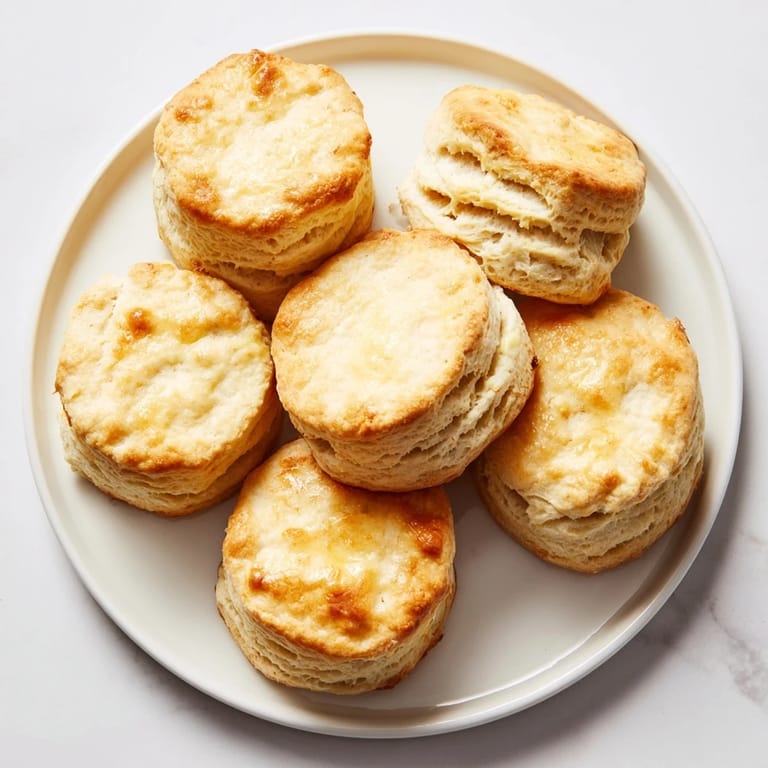
- Lightly brush tops with buttermilk and bake for 13-15 minutes until tall and golden brown
 Save
Save The first time I served these at a brunch, my friend Sarah took one bite and immediately asked for the recipe. Now she makes them every Sunday for her family, and her kids refuse to eat store-bought biscuits anymore. That is the highest compliment I could imagine.
Getting the Height Right
Placing biscuits close together on the baking sheet helps them rise taller because they support each other as they bake. If you prefer crispier sides, space them farther apart, but for that classic soft-sided biscuit, let them touch.
Making Them Ahead
You can cut the biscuits and freeze them raw on a baking sheet, then transfer to a bag once frozen. Bake them straight from the freezer, adding a couple extra minutes. This has saved me more times than I can count when breakfast needs to happen fast.
Serving Suggestions
Split warm biscuits and add a pat of butter that melts into all those layers. I love them with scrambled eggs and bacon, or topped with sausage gravy for a classic Southern-style meal.
- Honey or jam makes them perfect for afternoon tea
- Use them as the base for strawberry shortcake in summer
- Leftovers reheat beautifully in a 350°F oven for 5 minutes
 Save
Save There is something deeply comforting about pulling a tray of golden biscuits from the oven, the smell filling the whole kitchen. I hope these become part of your own kitchen traditions.
Recipe Questions & Answers
- → Why must the butter be cold?
Cold butter creates small pockets of fat that melt during baking, producing flaky layers. Warm butter blends into the flour, resulting in denser texture rather than the desired light, airy crumb structure.
- → Can I substitute regular milk for buttermilk?
Yes. Combine ¾ cup milk with 2 teaspoons lemon juice or vinegar, let sit for 5 minutes until slightly thickened. This homemade version provides the necessary acidity for proper leavening and tangy flavor.
- → Why avoid twisting the biscuit cutter?
Twisting seals the edges, preventing the biscuits from rising properly during baking. Press straight down and lift up cleanly to allow the sides to expand upward, creating tall, fluffy results with defined layers.
- → What causes biscuits to be tough or dense?
Overmixing develops too much gluten, making biscuits tough. Work the dough gently and stop as soon as ingredients combine. Overbaking also dries out the interior, so remove when tops are golden brown.
- → How should I store leftover biscuits?
Store in an airtight container at room temperature for up to 2 days. For longer storage, freeze baked biscuits in freezer bags for 3 months. Reheat in a 350°F oven for 5-10 minutes to refresh the texture.
- → Can I add cheese or herbs to the dough?
Absolutely. Fold in ½ cup grated cheddar, fresh chopped herbs like chives or rosemary, or a pinch of black pepper after incorporating the butter. These additions complement the buttermilk flavor beautifully.